Olive Oil Cake
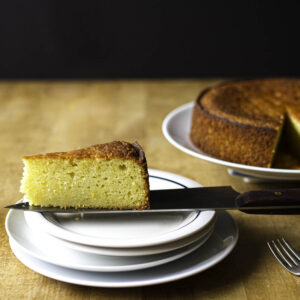
The perfect "anytime" cake.

My great-grandmother was the archetypal Southern hostess. Every Sunday, she and my grandmother prepared a big meal for the whole family, loading up the kitchen counters with casseroles, simply-prepared vegetables, an impressive medley of pickles, and “salads” that had never seen a single leafy green. And while everything she cooked was excellent, we all waited with great anticipation to see what cake she would make on a given week.
Her layer cakes were varied and colorful, ranging from strawberries and cream to German chocolate to a deep, dark red velvet (my favorite). She took a lot of pride in her cakes, and she continued making them well into her 90s. My grandmother, on the other hand, will quickly tell you that she’s not a baker, and I don’t know that I’ve ever seen her so much as attempt a tall, fluffy layer cake. But whenever I see the Tupperware cake carrier sitting on her counter, my heart does a little flutter of joy, because I know that hidden behind the opaque plastic dome is almost certainly a pound cake.
She makes a plain pound cake, chocolate pound cake, and, my favorite, a “7Up Pound Cake,” which does indeed contain 7Up. You’d think that, in contrast to my great-grandmother’s glorious and showstopping layer cakes, squat, dense pound cakes wouldn’t measure up. But for whatever reason, I’ve always preferred them. I love the tender sugary layer that forms on the top (once inverted, the bottom); the tight texture of the crumb, unbothered by the many tiny air bubbles essential to most cakes; the slightly denser layer that forms on the bottom as the cake sits, compressing itself with its own sturdy weight (Paul Hollywood would call this a flaw—”stodgy,” I can hear him say).
I appreciate how demure pound cakes are, how honest. No thick froth of frosting or fiddly trimming and layering. Pound cake is basically a delicious brick of cake, with nothing between you and the magic of unadulterated butter and sugar.
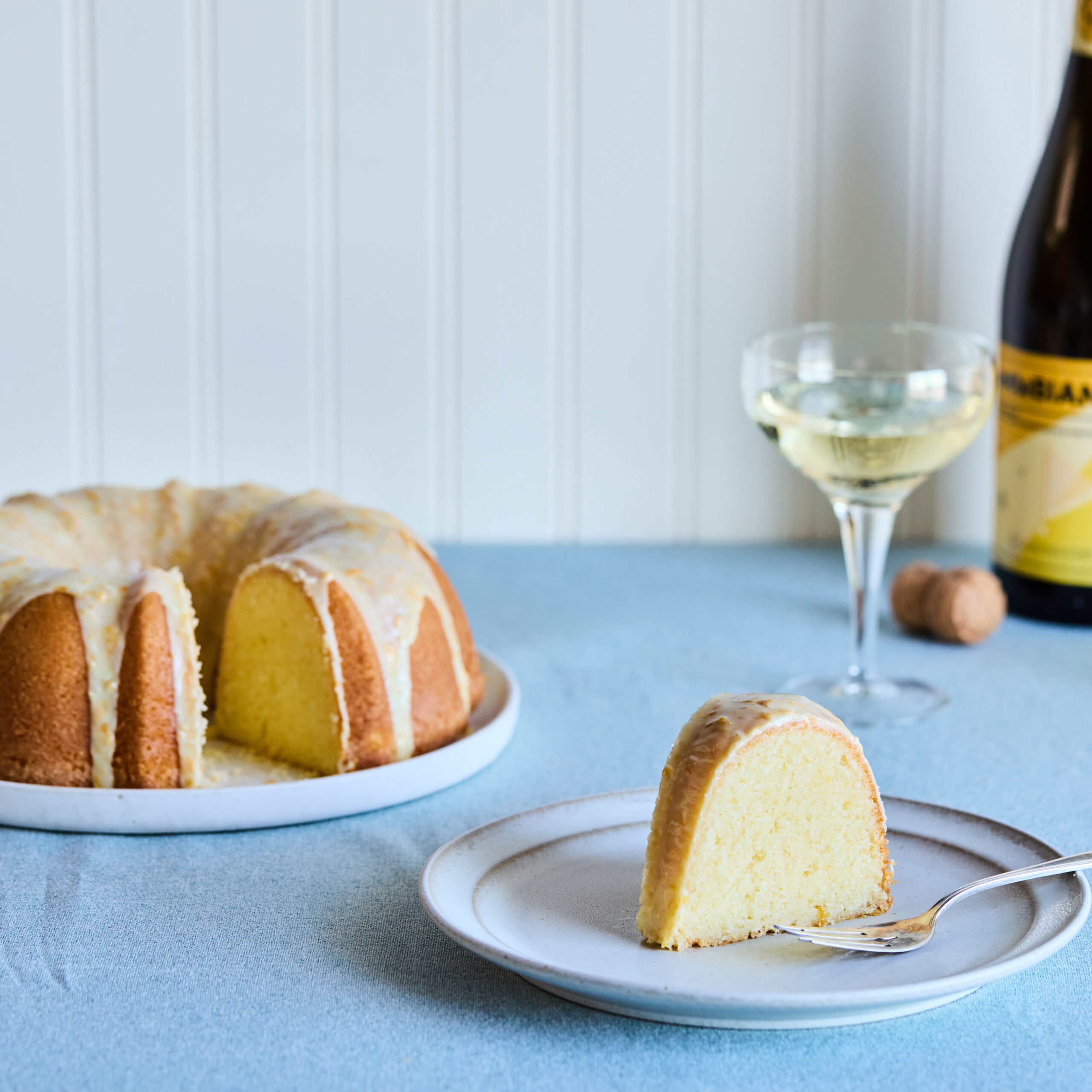
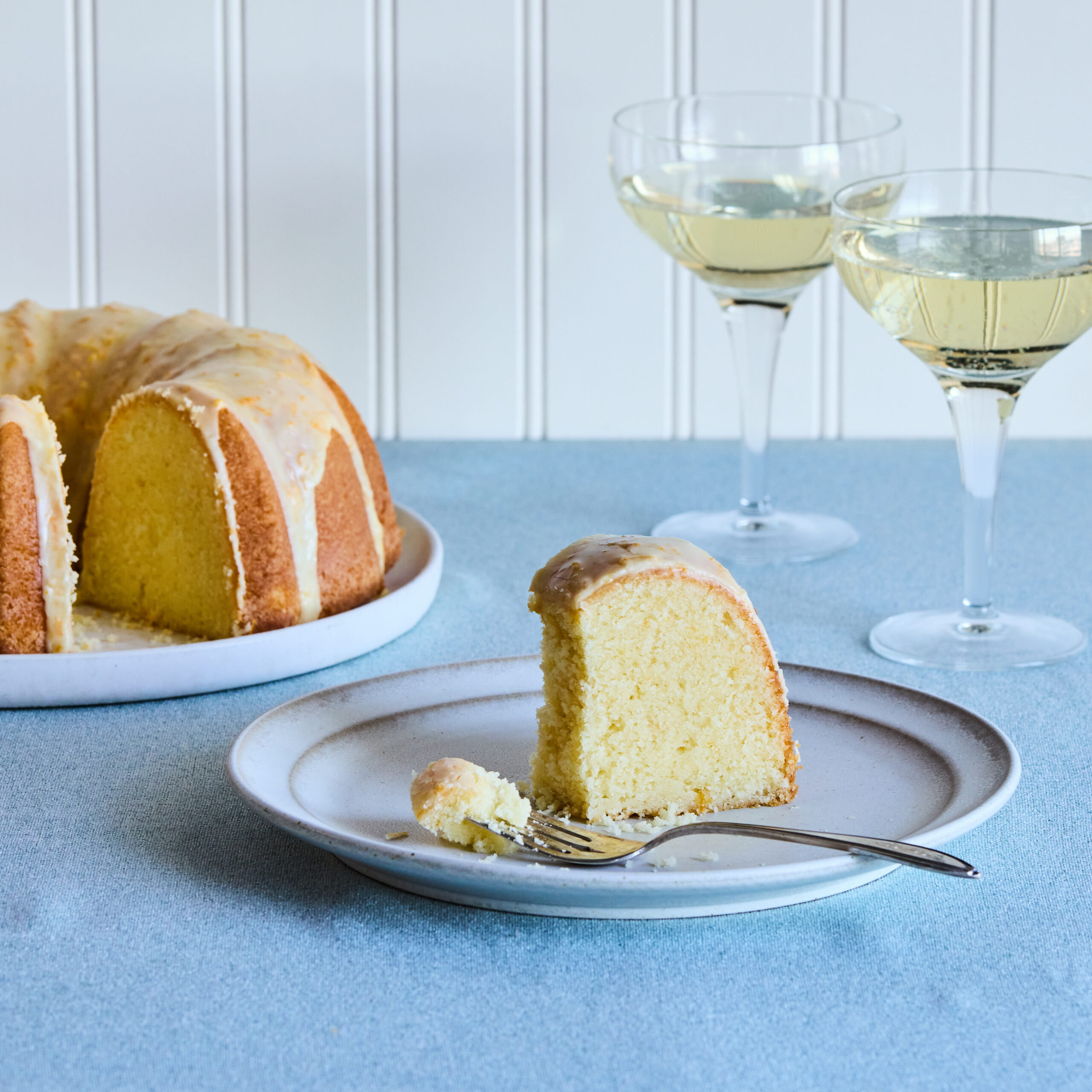
When I was starting my farmer’s market baking business, I wanted to develop a pound cake recipe that didn’t stray too far from my grandmother’s recipe, but I needed to give it a little zhush, both to make it mine and because I can’t help but fiddle. I loved the little bit of citrus tingle that 7Up gave her cake, so I mulled over some possible substitutions, eventually landing on sparkling wine. At that point, it was a very small leap to adding orange zest and a simple orange icing for window dressing.
Similar to my cheddar-scallion biscuits, the mimosa pound cake was an instant hit at the market, and every time I’ve served it since then, no one seems to mind the lack of layers or frosting. They’re too busy putting bite after bite into their mouths to complain.
Have all ingredients at room temperature, about 70°F.
Preheat the oven to 325°F. Butter and flour a 9 or 10-inch bundt or tube pan.
Beat in a large bowl, or in the stand mixer with a paddle attachment, until smooth:
2 sticks (8oz or 225g) unsalted butter, softened
1/2 cup (95g) vegetable shortening
Finely grated zest of 1 orange
(1 teaspoon orange extract)
1 teaspoon vanilla
1/2 teaspoon fine sea salt or table salt (1 teaspoon Diamond Crystal kosher salt)
Add and beat until very fluffy, 5 to 7 minutes:
3 cups (600g) sugar
Add one at a time, beating until each is combined and scraping down the sides and bottom of the mixing bowl several times as you go:
5 large eggs
Add in 3 parts:
3 cups (330g) cake or pastry flour
alternating with, in 2 parts:
1 cup sparkling wine, poured and settled
Beat until just combined. Scrape the batter into the prepared cake pan and bake until a skewer inserted in the center comes out with moist crumbs attached, about 1 hour 10 minutes.
Let the cake cool in the pan on a cooling rack for 10 minutes. Unmold onto a rack to cool completely.
While the cake cools, make the glaze (do not make the glaze too far in advance, as it will harden as it sits). Stir together in a medium bowl:
3 cups (300g) powdered sugar, sifted
Finely grated zest of 2 oranges
1/4 to 1/3 cup sparkling wine, or enough to reach a thick but pourable consistency
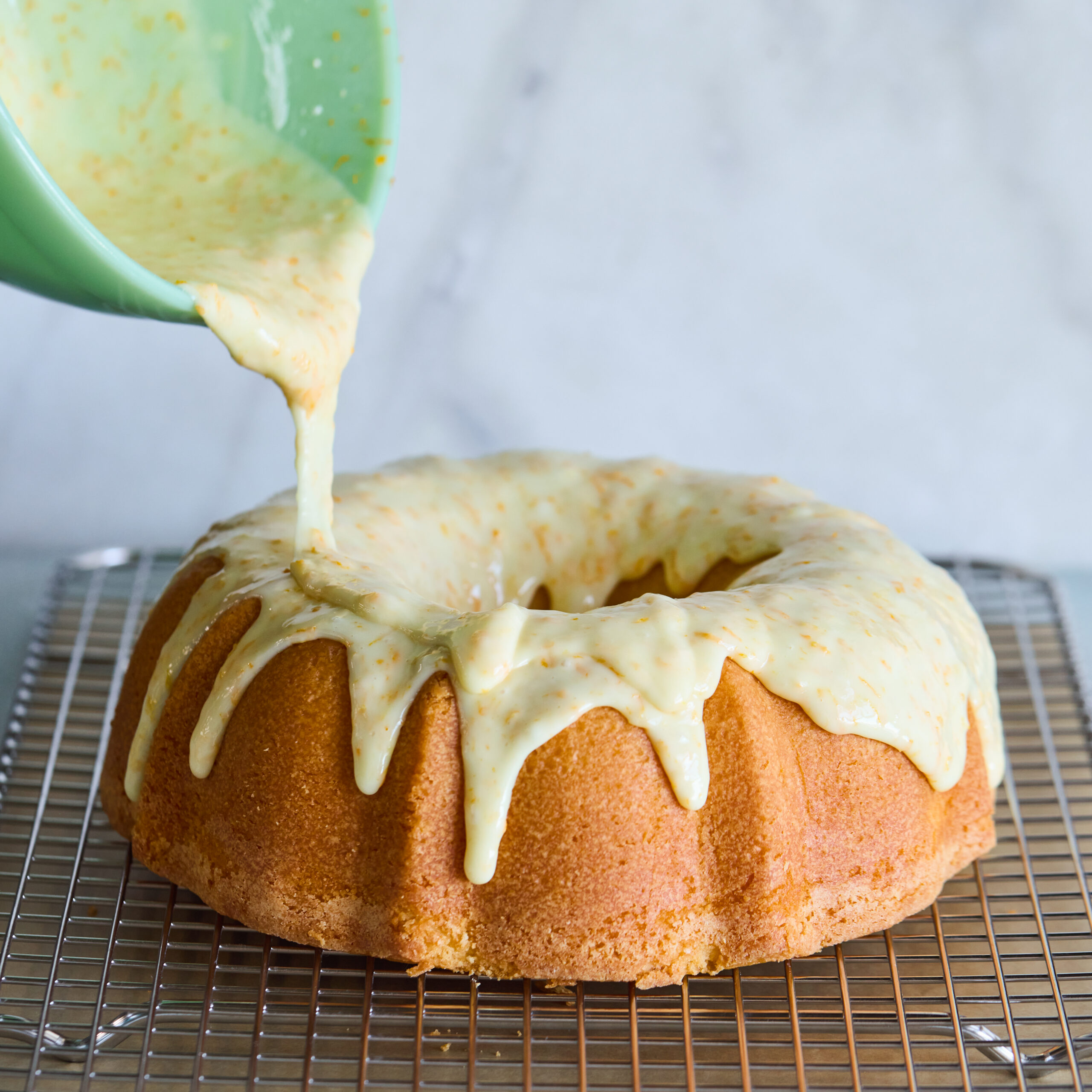
Place a piece of parchment paper under the rack the cake is sitting on. Pour the glaze over the cake. Let sit until the glaze hardens slightly, about 10 minutes.
Megan Scott is a food editor, writer, and recipe developer with over 15 years of wide-ranging experience in the culinary industry. She has been a cheesemaker’s apprentice, a bakery owner, a pastry chef at a fine dining restaurant, and a culinary director at a creative agency where she developed thousands of recipes for food brands. In 2019 she co-authored the ninth edition of Joy of Cooking, and she is the cohost of the Joy of Cooking Podcast. She lives in Portland, Oregon, with her husband and collaborator, John Becker, and their two cats, Loki and Lola.





Worth making in its own right, even if your zucchini crop was a bust.