Pie Making 101: Mixing Pie Dough
Practice makes perfect, but this primer will have you turning out flaky crusts in no time.

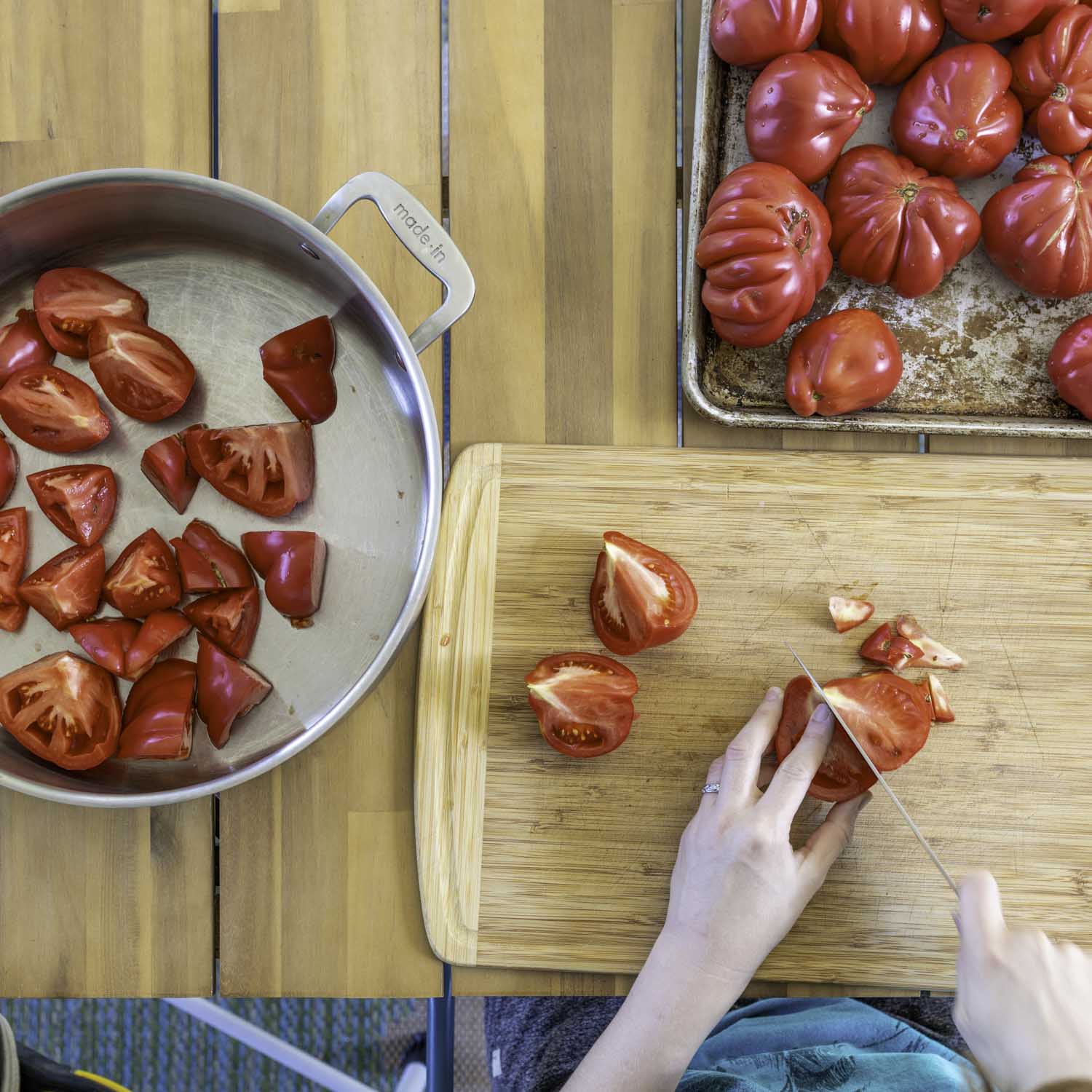
Peeling tomatoes was the first kitchen prep task I found truly irritating. Scoring and blanching them one by one is time-consuming enough, but when combined with carefully removing the skins—which may or may not need another dunking to come loose—the whole process starts to remind you of climbing an endless flight of stairs, pushing boulders uphill only for them to roll back later, etc. For those who go further and seed the tomatoes: we respect your dedication without a trace of envy, and hope you are well compensated for your trouble.*
*We should also note that seeding tomatoes actually diminishes their savory flavor: the “locular gel” surrounding the seeds is high in glutamates and other umami-producing compounds.

Thankfully, there are a few tricks that can get you around blanching. The easiest by far is to simply freeze the tomatoes solid on a sheet pan, then let them thaw. If you have the time, this really is the way to go. The skins just slip right off! No muss, no fuss. You do have to be patient, and doing more than a quarter sheet pan at once takes up more freezer space than most of us can spare.

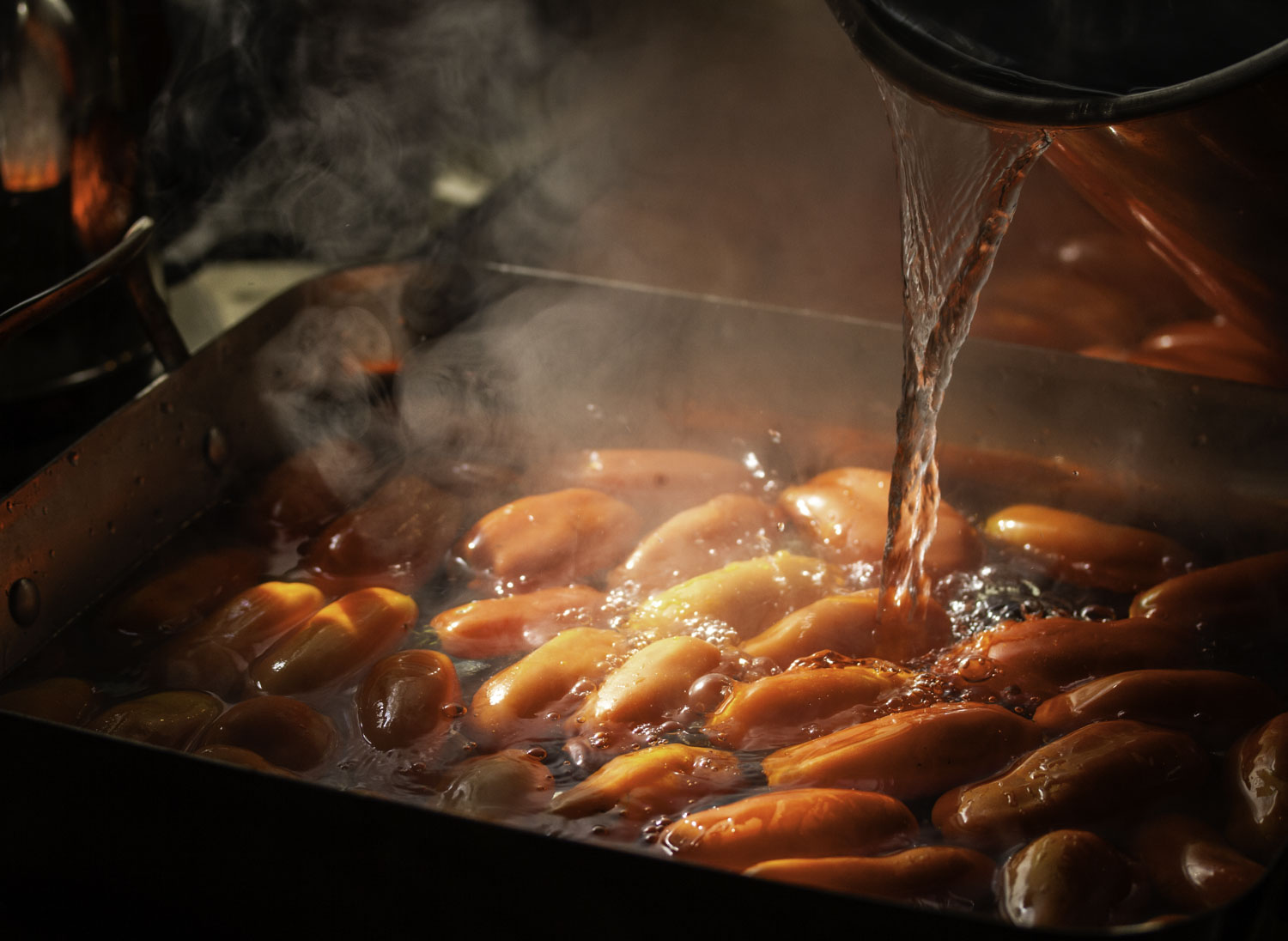
Another peeling option: If you have a deep roasting pan, you can arrange tomatoes in one layer and then cover them with boiling water. Wait until the tomatoes are cool enough, and they’ve effectively been blanched in bulk. A few drawbacks here: this still takes a fair bit of time, and you will cook their outer layers slightly. Since they break down a bit, some of their juices disperse in the water too.
For those who wish to avoid peeling altogether, there are some alternatives. You can ignore the skins, and we often do for salsas and other raw dishes. However, once they’re cooked, shreds of tomato skin can turn tough. They’re an unpleasant surprise; even small ones can get stuck in your teeth. If you’re not set on a chunky texture and are working with a smaller quantity of tomatoes, shredding them on a box grater is a pretty good method, whether you’re making pan con tomate for a crowd or a small batch of marinara.

Some small pieces of skin make it past the grater, but with a little practice most of it remains intact. Puréeing in a blender or food processor is an option too, but we don’t recommend it; by the time their skins have been puréed into submission, the tomatoes turn “creamy” and pale with all of the air that’s whipped into them.
When we’re dealing with large quantities for canning, we trade the box grater for a food mill. We dislike peeling generally, but especially with pleated varieties like Costoluto Genovese (pictured at the top of the page being meticulously peeled the hard way) or these Astianas.
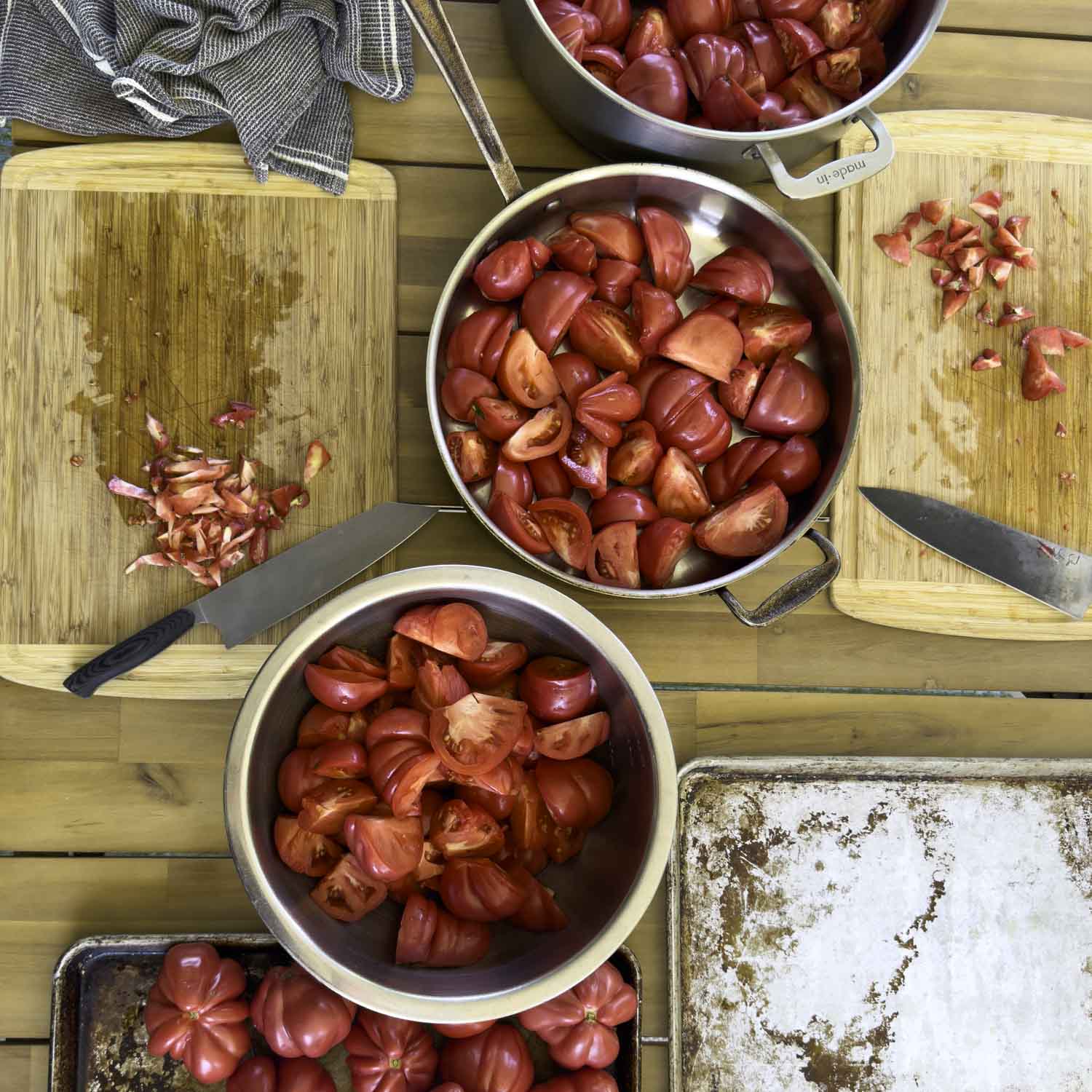
After a year or two of frustration, we stopped canning them whole or crushed and now employ a lazy “passata” approach: we core and quarter the tomatoes with the skin on, simmer them for five minutes while breaking them up with a potato masher, and then run them through an OXO food mill fitted with the coarsest plate.
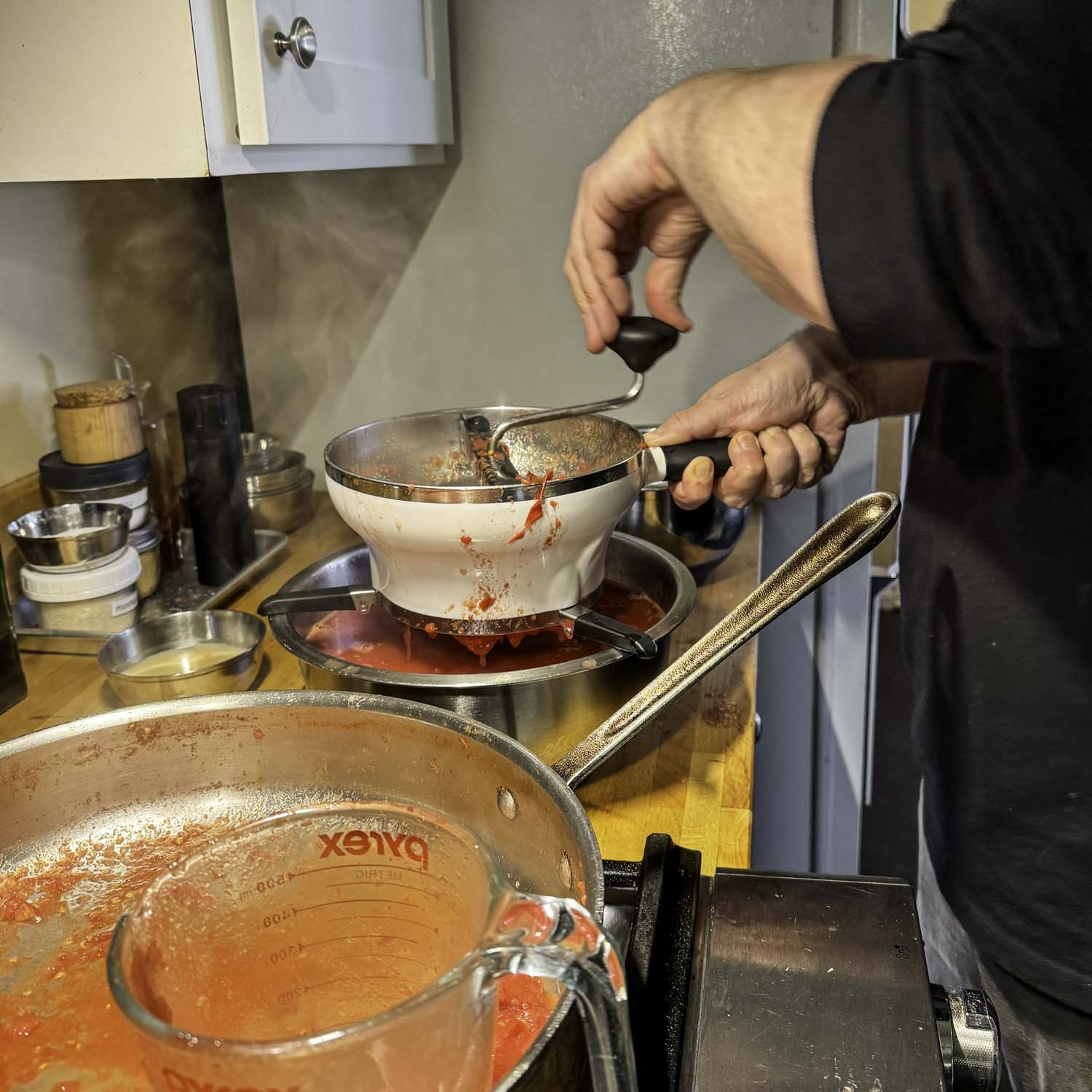
The mill does a great job of scraping as much goodness as possible from the skins. The result is obviously not as chunky as peeling and crushing, but we think it’s a good compromise.

John Becker, Irma’s great-grandson, is the fourth generation co-author and steward of the Joy of Cooking. John has a background in literature, research, and critical writing. Influenced by his father Ethan’s improvisational style and his mother Joan’s love of international foods and spices, John started experimenting in the kitchen at a young age, whether in his mother’s Portland, Oregon condo or at the Becker family home in Cincinnati, Ohio. Many decades later, he continues to revisit Joy’s classic dishes while exploring new recipes, ingredients, and ways of thinking about home cooking.
Things that are true about John




Practice makes perfect, but this primer will have you turning out flaky crusts in no time.
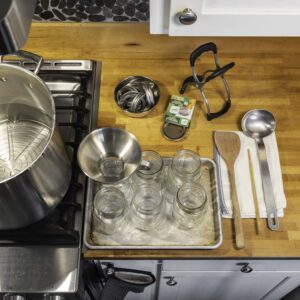
The right tools in the right place = easier preserving.