Tomato-Orange Soup with Dijon-Miso Cheesy Toast
A bright and tangy Portland deli classic that's perfect for warding off the chills after a month of cold, drizzly…

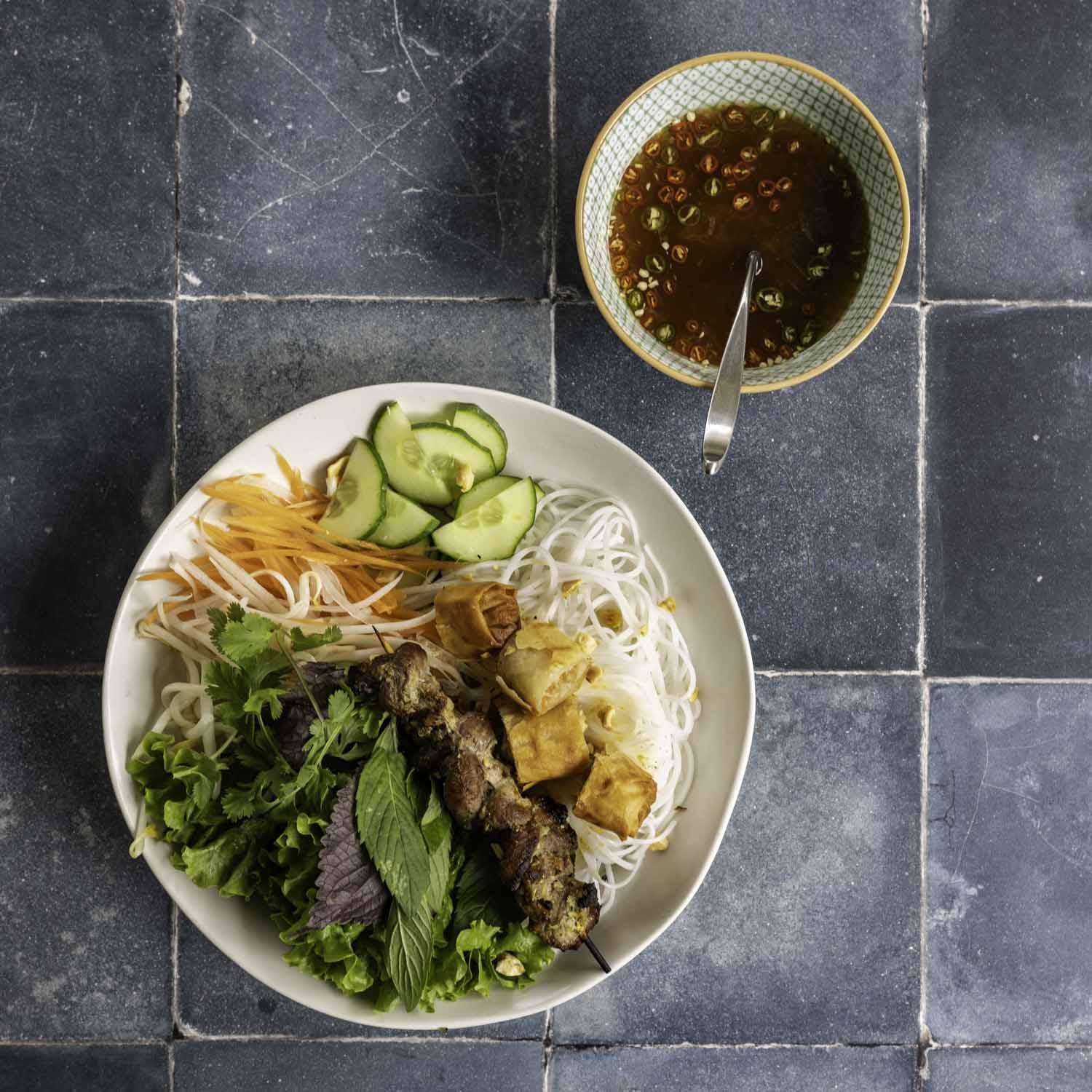
When we moved back to Portland in 2013, Vietnamese rice noodle bowls quickly became our favorite summer lunch. A modest heap of chilled rice noodles topped with a crisp aromatic salad of carrot, daikon, mung bean sprouts, and cucumber, and a generous handful of fresh herbs is a glorious thing on a hot afternoon.
For several years, we lived a five-minute walk from a restaurant that offered the deluxe combination version of this dish, each bowl crowned with a freshly fried chả giò (crunchy imperial roll) cut into bite-sized nuggets, and one skewer each of charred marinated pork and shell-on shrimp.
While this “fully loaded” version of the dish is served at dozens of Vietnamese restaurants around town, for the sake of convenience we take a more minimalist approach. Whipping up a mixed surf-and-turf of grilled shrimp and pork is nice, but we usually go with one or the other. Unless we happen to have frozen chả giò on hand, we often skip that as well.
On a recent trip to Vietnam, we had several bowls of bún that featured imperial rolls as the only protein, (bún chả giò chay) and it made for a fantastic light lunch. If I ever make fresh imperial rolls again, I will definitely be making this version for lunch the next day. (Making chả giò is actually a delightful project and well worth the effort.)
As with most salad-adjacent dishes, it’s trivially easy to substitute (or supplement) the typical toppings with whatever crisp vegetables and fresh herbs you have on hand. Snap peas are a favorite, as are hakurei turnips, green onion, chives, rau ram (Vietnamese coriander), and watercress.
If you opt for pork, there are two common options: thin, bone-in pork loin chops or pork shoulder cut into strips and threaded on skewers. We enjoy both options, but skewers are a little easier to deal with at the table.
Marinating requires a tiny bit of advance planning, but the rest of this dish comes together in no time. At the height of summer grilling season, we often make up a double batch of nước chấm to keep around for multiple bowls throughout the week.
FOR THE MARINATED PORK
FOR THE NUOC CHAM
FOR THE RICE NOODLE BOWLS
Have ready one of the following:
4 bone-in or bone-in center-cut pork loin chops, about 3/4 thick
1 1/2 pounds boneless pork shoulder, large streaks of fat removed
If using pork shoulder, slice it across the grain into 1/4 – to 1/2-inch-thick slabs.
Prepare:
Lemongrass Marinade, below
Combine the pork with the marinade in a zip-top bag or bowl. Refrigerate for at least 2 hours and up to overnight, turning occasionally so it marinates evenly.
If using wooden skewers, soak them in water for at least 1 hour.
Meanwhile, prepare and set aside:
Nuoc Cham, below
Have ready:
12 ounces dried, thin rice noodles or one 16-ounce package fresh rice stick noodles (see note)
For dried noodles, soak in warm water for 30 minutes or until tender, then drain thoroughly and set aside. For fresh noodles, boil enough water to cover the noodles, and pour it over them in a large bowl, swirling them with a pair of chopsticks until they are pliant and looking a bit translucent, about 1 to 2 minutes. Drain noodles, then return them to the bowl and fill with cold water. Let noodles cool completely then drain thoroughly and set aside.
Transfer the pork to a rack, wiping excess marinade back into the bag or bowl with your fingers. Pat the meat dry. If using pork shoulder, thread the meat onto skewers.
Prepare a hot, two-zone grill fire. For pork chops, place the chops on the grill over direct heat for about 8 minutes, turning once or twice. The chops are done when a thermometer inserted in the center of the meat (near but not touching any bones) reads 145°F. For pork skewers, grill over direct heat until charred around the edges, about 6 minutes. When skewers brown to your liking, pile them on top of one another on the cooler side of the grill; when the last skewers are moved off the heat, close the grill and cook for 10 minutes more.
Divide the noodles among 4 bowls. Top the noodles with:
2 cups shredded leaf lettuce, romaine, or napa cabbage
1 large cucumber, peeled, seeded, and thinly sliced
1 large carrot, shredded
4 ounces daikon, shredded or thinly sliced
5 green onions, chopped
Arrange the skewers or pork chops on top of the vegetables. Serve with the nuoc cham to spoon over the bowls and any of the following garnishes:
Lime wedges
Mung bean or radish sprouts
Sprigs of assorted herbs, such as cilantro, mint, and shiso
Sambal oelek or sriracha
Chopped roasted peanuts and/or fried shallots
LEMONGRASS MARINADE
About 1 cup
This marinade is excellent with chicken, pork, or shrimp. Marinate shrimp for no more than 2 hours, and chicken or pork for up to 8 hours.
Combine in a food processor:
1 medium shallot, coarsely chopped
1/2 cup chopped cilantro leaves and stems
1/4 cup packed grated palm sugar or light brown sugar
1/4 cup lime juice
1/4 cup fish sauce
6 garlic cloves, coarsely chopped
3 lemongrass stalks, tender bottom portion only, thinly sliced
2 fresh or dried Thai chiles, stemmed, or 1 teaspoon red pepper flakes
1/2 teaspoon white pepper
Pulse until finely ground.
NUOC CHAM
About 1 cup
Stir in a small bowl until the sugar has dissolved:
1/2 cup water
1/3 cup lime juice, distilled white vinegar, or a combination
3 tablespoons sugar, or to taste
2 to 6 tablespoons fish sauce, to taste
Add:
1 or 2 Thai chiles or serrano peppers, to taste, thinly sliced
(3 garlic cloves, minced)
Let stand for at least 10 minutes before serving to allow the flavors to develop. The sauce will keep, covered and refrigerated, for up to 2 days if made with lime juice, or for 6 days if made with vinegar.
We prefer picking up a pack of “fresh” rice stick noodles (also called banh pho tuoi), which can be found in the refrigerated section at many Asian grocers.
John Becker, Irma’s great-grandson, is the fourth generation co-author and steward of the Joy of Cooking. John has a background in literature, research, and critical writing. Influenced by his father Ethan’s improvisational style and his mother Joan’s love of international foods and spices, John started experimenting in the kitchen at a young age, whether in his mother’s Portland, Oregon condo or at the Becker family home in Cincinnati, Ohio. Many decades later, he continues to revisit Joy’s classic dishes while exploring new recipes, ingredients, and ways of thinking about home cooking.
Things that are true about John



A bright and tangy Portland deli classic that's perfect for warding off the chills after a month of cold, drizzly…
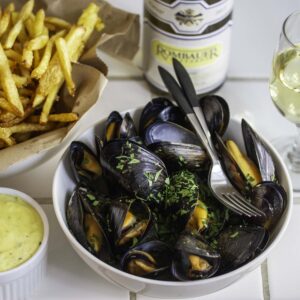
One route to happiness: plump mussels, rich broth, crisp fries, garlicky aïoli, and crusty bread.