How To Make a Restorative Bowl of Chicken Soup
Head cold got you down? Nurture yourself properly by upgrading that bowl of chicken soup with extra "medicine."
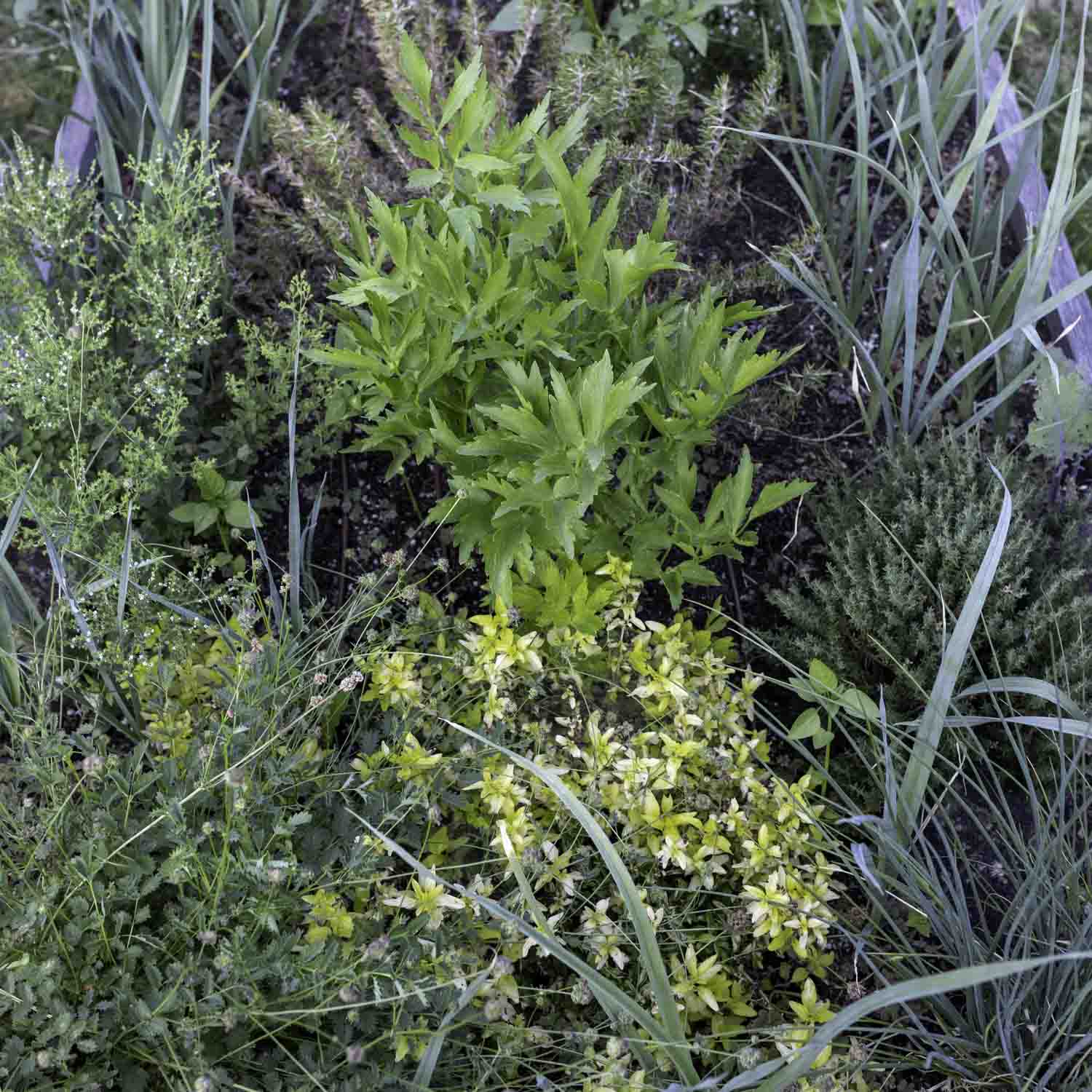
Using fresh herbs in cooking is one of the easiest ways to make food more delicious. I stand by this, but at the same time I have always been frustrated by the scarcity and cost of fresh herbs at most supermarkets. I decided long ago that I would never again buy the tiny, overpriced clamshells of herbs at my local grocery store. It just feels like I’m being had.
We’re very lucky to own a home, and after we closed on our cute mid-century ranch we planted a little herb garden as soon as we could. For herbs we can’t really grow due to climate (or grow in enough quantity) we shop at nearby Asian and Latino markets, which always stock an impressive variety of affordable herbs.
Fresh herbs are just a part of how we look at cooking now, and we’re in good company.
There has been an elaborate illustration of a very fancy-looking herb garden in Joy since 1975 (aside from the 1997 edition… long story). It’s one of those out-of-left-field bits of Joy flotsam—much like the notorious squirrel illustration—that seems out of place unless you understand a little of the history of the book.
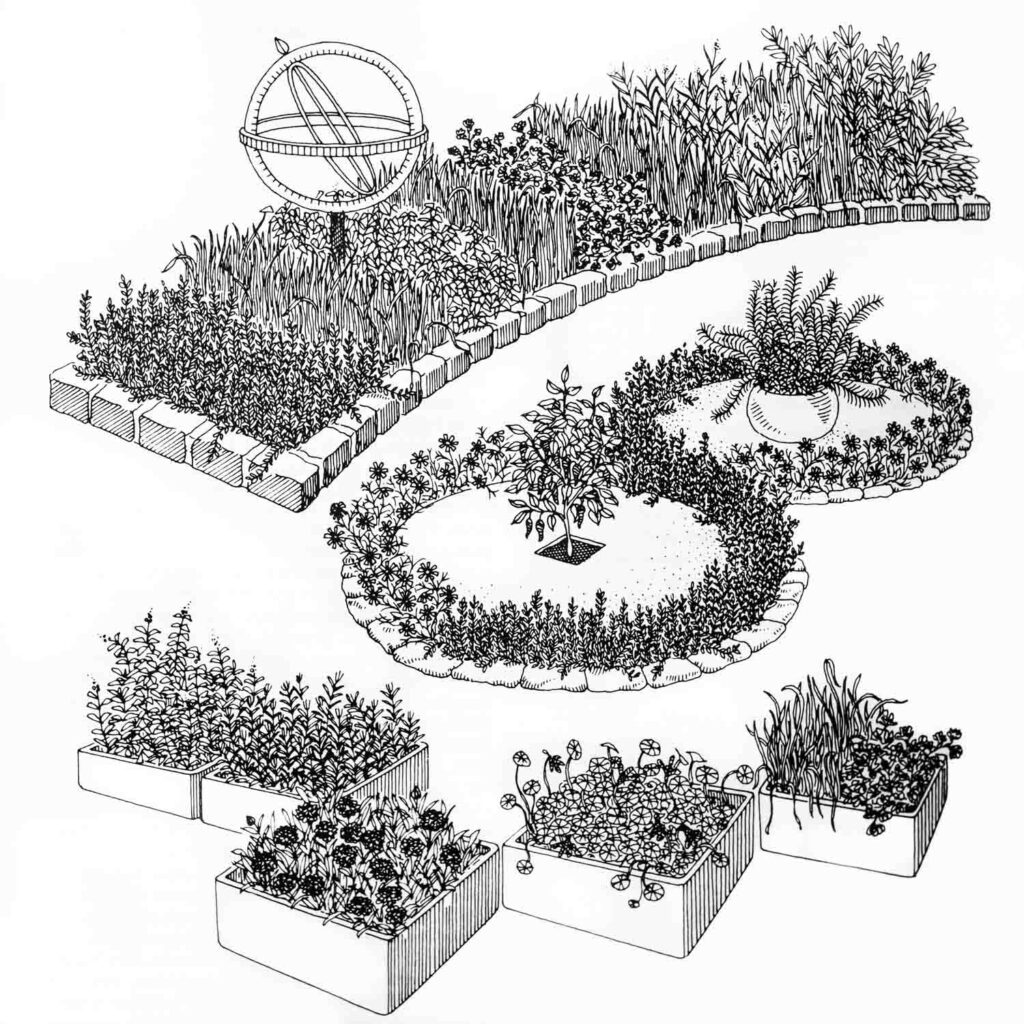
Marion Becker, Irma’s daughter, was a lover of gardening and designed and planted this herb garden plot in the front of her house. Captured by renowned artist Ikki Matsumoto, the illustration is included in Joy’s Know Your Ingredients chapter, accompanied by Marion’s thorough treatise on why and how you should grow culinary herbs, which delves into horticultural minutiae like garden design and when to fertilize.
A self-described lebenskunstler or “life artist,” Marion was an illustrator, a teacher, a collector of modern art, and a self-taught naturalist and gardener.She was an unlikely figure to take on the project of revising Joy when Irma passed away. Marion had worked on every previous edition of Joy in some capacity—and was certainly more than up to the task intellectually—but she was ill-suited to it in other ways. Where Irma was fiery and eager to be heard, Marion was soft-spoken and hated the spotlight. Where Irma flew by the seat of her pants, Marion was methodical and serious.
But Marion transformed Irma’s capricious (and beloved) “little book”—Irma’s words—into a comprehensive (and even more beloved) volume that came to symbolize everything a person would need to become a good cook.
And Marion’s Joy wouldn’t be complete without an ode to her herb garden. It’s worth pointing out that when Marion worked on Joy—the ‘60s and ‘70s—fresh herbs (beyond parsley) were virtually unavailable at grocery stores. According to her son, Ethan Becker, “if you wanted fresh herbs you had to grow them yourself.”
Marion grew sage, tarragon, parsley, dwarf basil, thyme, and chives in her garden. We grow all of these herbs in our own herb garden minus the parsley. We have added other herbs to our plot that are almost impossible to buy even now—summer and winter savory, lovage, marjoram, salad burnet, and lemon verbena among them.
Here is our herb plot, shortly after we transplanted everything from another bed:
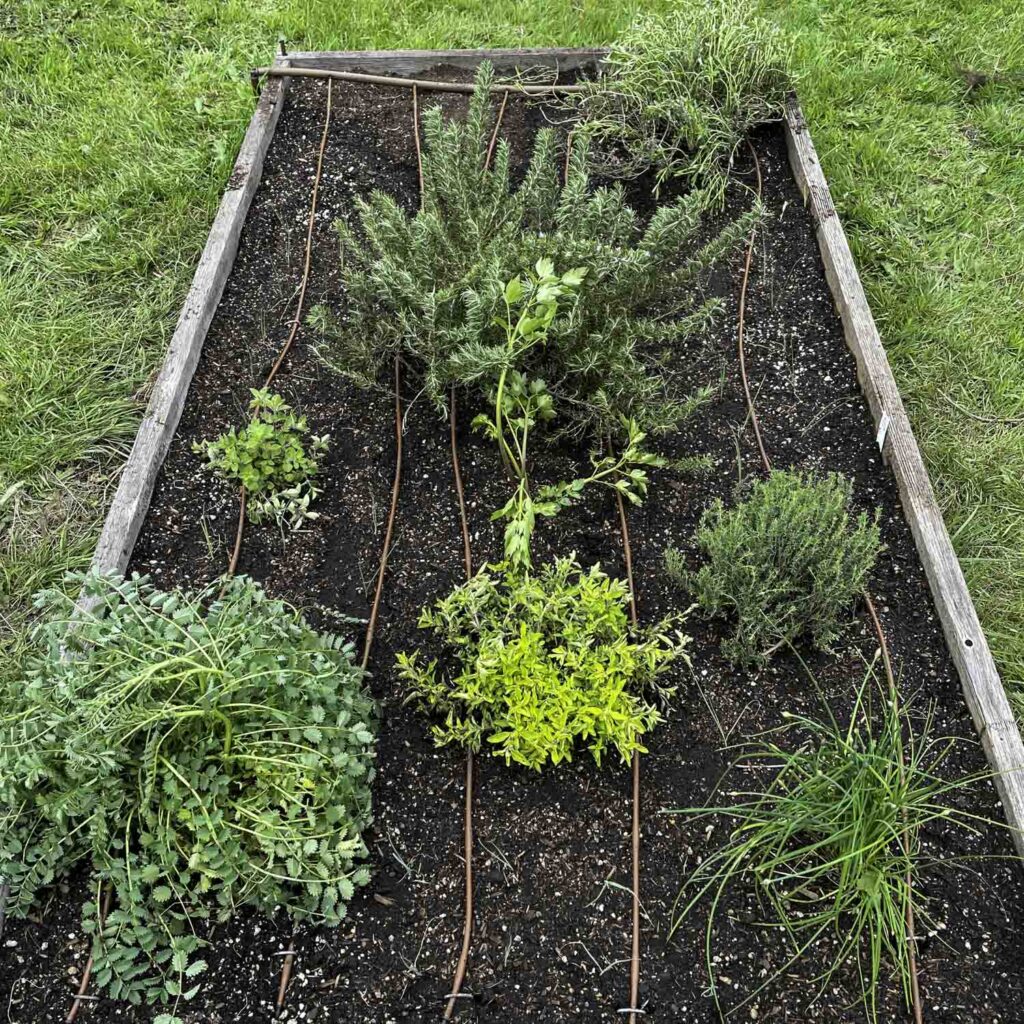
And here is the same plot two and half months later with several more additions, including za’atar (the herb, not the blend), a bunch of young leeks, plus a tomatillo volunteer or two:
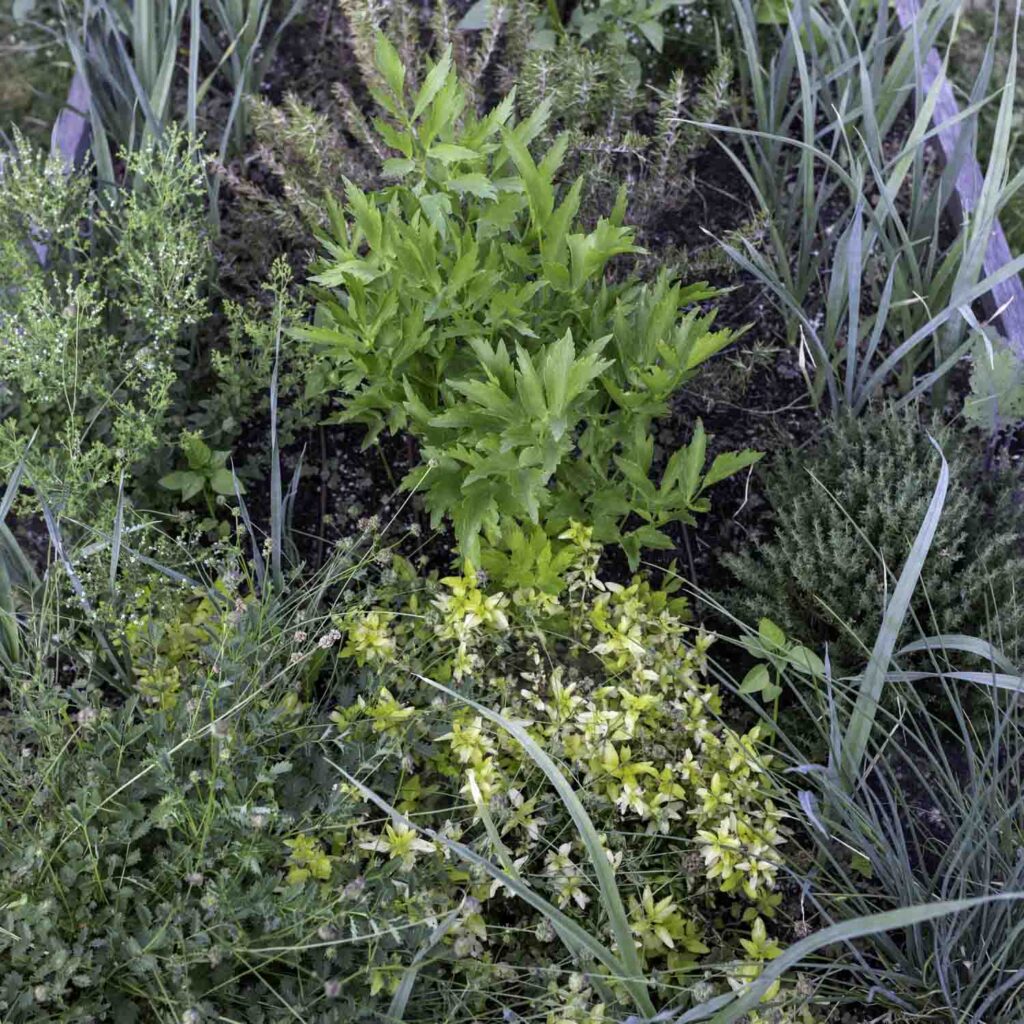
We usually don’t bother with tender, annual herbs that are easily bought at the store—parsley, cilantro, dill—because we use them liberally, and they tend to bolt (go to seed) at the drop of a hat. Occasionally, we plant more unusual annuals like shiso, culantro, rau ram, and papalo. Many of these are available at markets convenient to us, but when we encounter unusual herb starts, it’s hard to pass them up.
Some especially vigorous herbs like oregano and borage have escaped the herb garden and pop up randomly across our yard. Mint is the sole herb that we keep sequestered in its own pot, as it loves life so intensely—especially here in the cool, rainy Pacific Northwest—that it’s considered invasive.
Beyond making food taste delicious, herbs are satisfying to grow because they require so little. As Marion observes, if you “treat [herbs] with neglect [you will] reap them for twenty years.” Even brown thumbs can excel at herb gardening. Hardy herbs like thyme, rosemary, sage, and savory fall into this low-maintenance category. They seem oblivious to poor soil, drought, heat, or cold.
Other herbs, like lovage and tarragon, benefit from a bit more care and flourish if they are watered occasionally. I water them every other day in very hot, dry weather but for most of the year they require no watering—of course, this is Pacific Northwest gardening advice, so note your climate and proceed accordingly.
If you can’t grow your own herbs, I recommend sourcing them from stores other than your standard chain supermarket. For tender herbs like cilantro, Thai basil, and mint, try your closest Asian market. For hardy herbs like thyme and oregano, you may have to shop around. We’ve found a couple grocery stores that offer bulk herbs so you only have to buy what you truly need, and then a couple stores that sell larger bunches—a better deal than the depressing plastic clamshells at Safeway or Kroger.
Megan Scott is a food editor, writer, and recipe developer with over 15 years of wide-ranging experience in the culinary industry. She has been a cheesemaker’s apprentice, a bakery owner, a pastry chef at a fine dining restaurant, and a culinary director at a creative agency where she developed thousands of recipes for food brands. In 2019 she co-authored the ninth edition of Joy of Cooking, and she is the cohost of the Joy of Cooking Podcast. She lives in Portland, Oregon, with her husband and collaborator, John Becker, and their two cats, Loki and Lola.

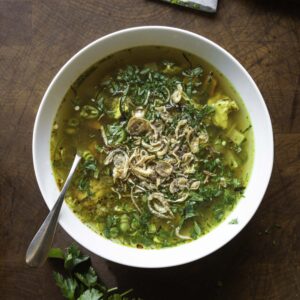
Head cold got you down? Nurture yourself properly by upgrading that bowl of chicken soup with extra "medicine."