The Joy of Growing Herbs
If you have an area around your home that gets ample sun, do future you a favor and plant some…

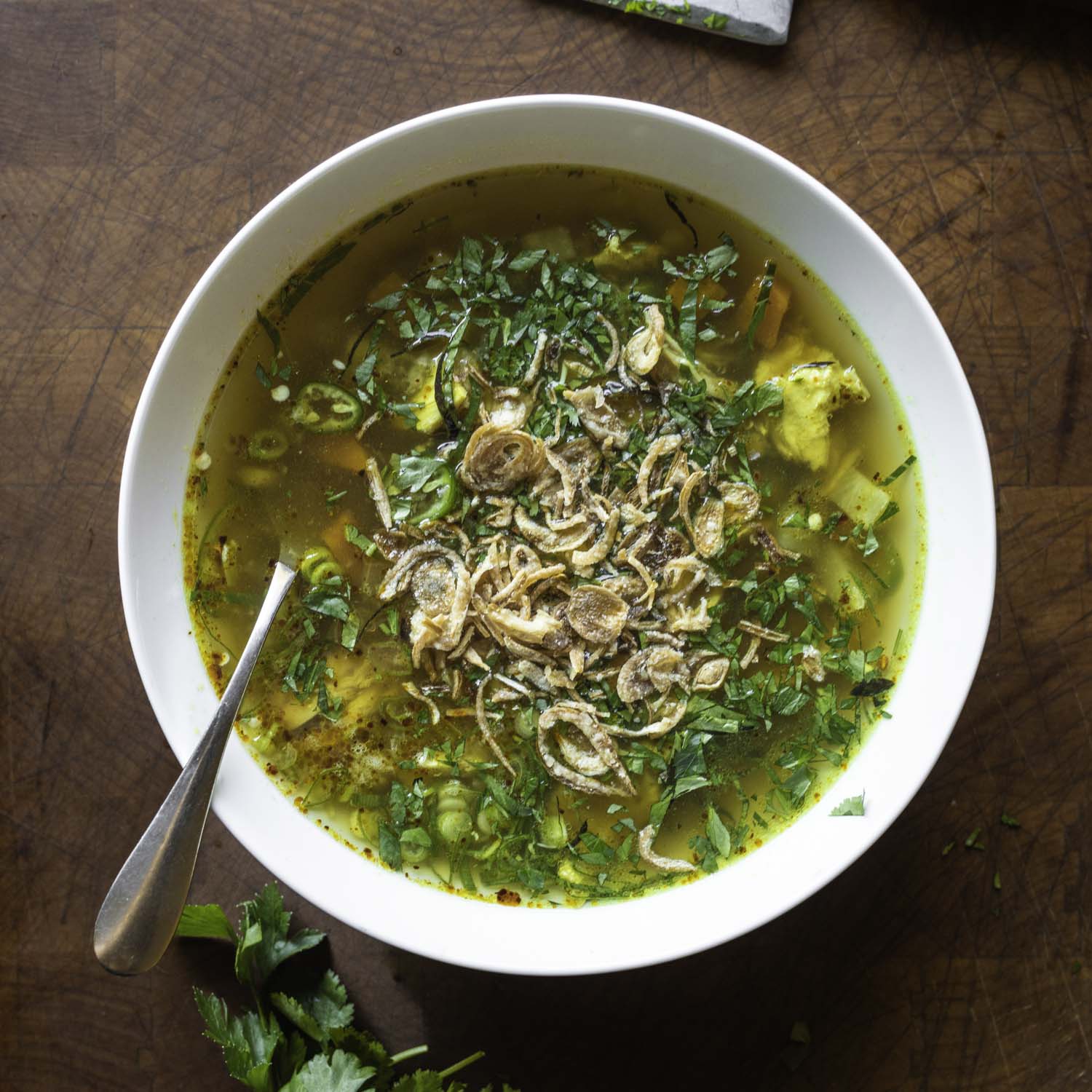
Last Thanksgiving, I got an atrocious head cold. Nothing too devastating, and we weren’t hosting, but it was enough to keep us home.
Whenever I get sick, John makes real chicken soup. No shortcuts. Soup made from a chicken and homemade chicken stock. I don’t know why this soup is a healing soup, it just is, in a “the sky is blue” sort of way.
We always have homemade chicken stock in the freezer, thanks to our stock bag habit (eat chicken, put the bones in the freezer, repeat until you have a big bag full of frozen bones, make stock), so once you have that you’re halfway there.
Then you gently poach a whole chicken in that stock until it is *just* cooked. You have now created a double stock and you have a bunch of cooked chicken. Amazing.
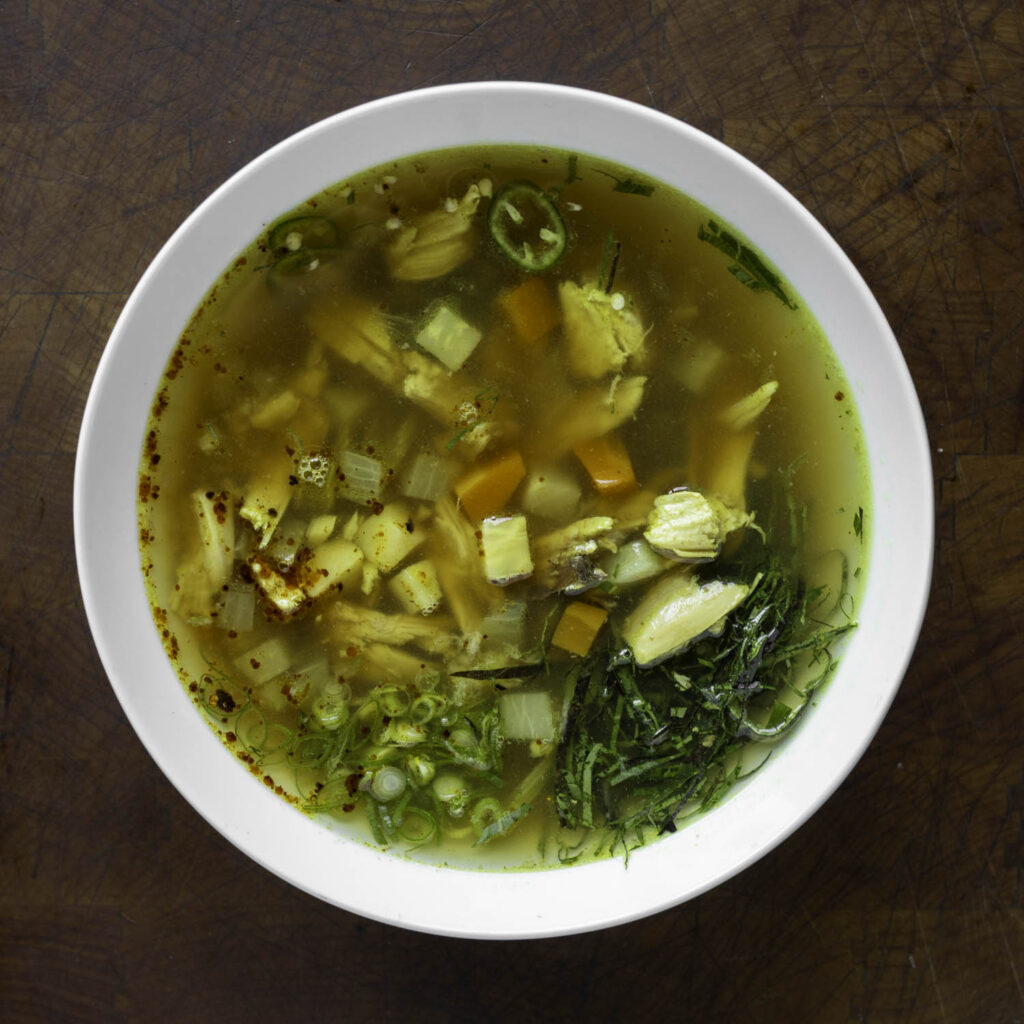
Finally, you introduce a vegetable element. This is usually of the onion, celery, carrot variety, but this time we used onion, carrot, Gilfeather turnip, and celery root (the last two choices were dictated by our CSA share). Parsnips are also very decent in chicken soup, as are turnips. Simmer your chosen vegetables in the broth until tender.
We sometimes add Madras curry powder to our chicken soup for more complexity, and also because it gives the soup a beautiful golden color befitting the chicken.
Strong ginger-lemon toddies are a long-standing remedy in our house. The basic formula: peel and thinly slice a thumb-sized piece of ginger, place in a mug, fill two-thirds of the mug with boiling water, cover with a saucer, and let the ginger steep for four or five minutes. Then add bourbon, lemon juice, and honey to taste. We have tried simmering the ginger in water as well, but steeping really does produce the best flavor.
We eat a lot of exceptional Vietnamese soups in Portland at small, family-owned restaurants, and other than the euphoria you get after gulping down a bowl of phở dặc biệt or bún bò huế, our favorite thing about these soups is that you customize your own bowl with a variety of flavorful garnishes.
There’s chili paste, fish sauce, and fresh herbs on the table, and it’s your job to make your bowl taste as perfect as you think it can be. One of our favorite establishments stocks each table with a ramekin of raw garlic paste. When you add a spoonful (or two) to your soup, the garlic cooks ever so gently in the piping-hot broth.
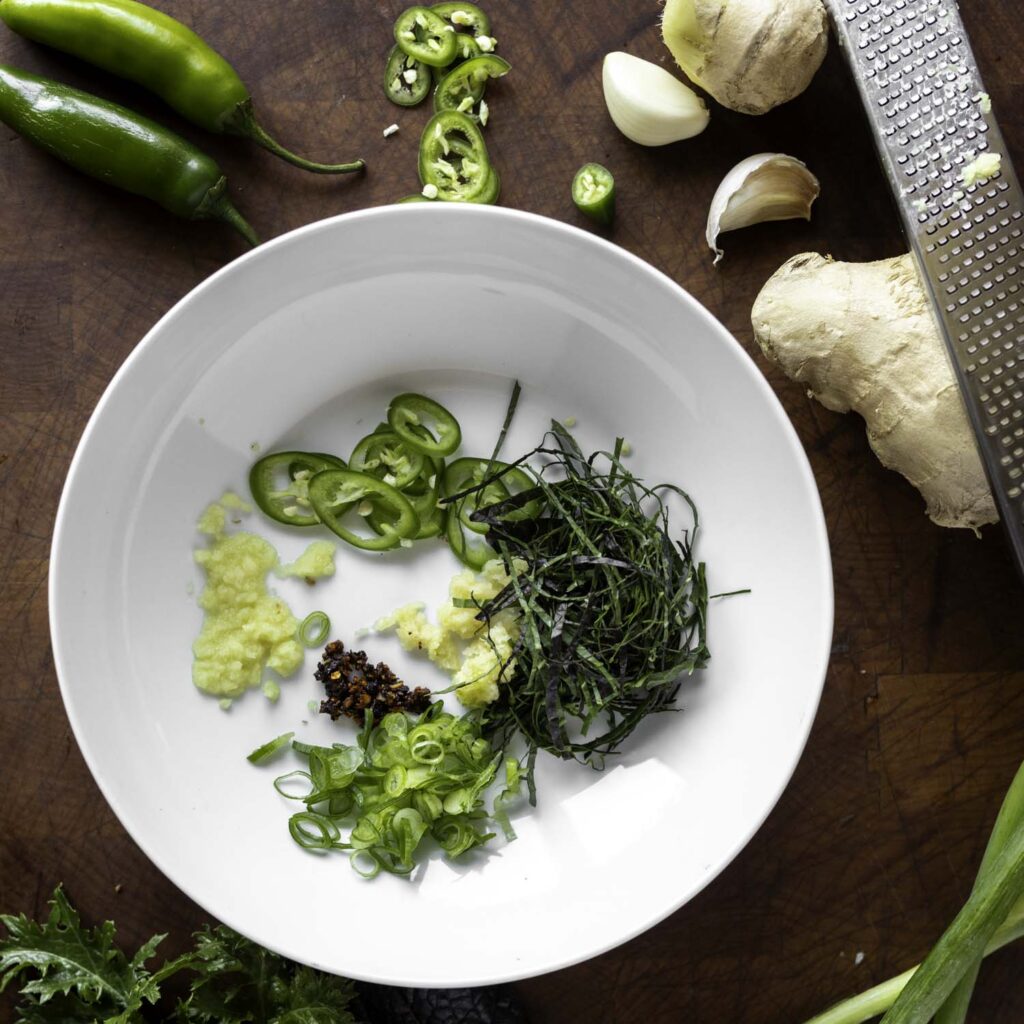
Taking inspiration from hot toddies and cues from our favorite soup joints, John started adding raw, sinus-clearing aromatics to each bowl for a truly “medicinal-strength” chicken soup. After several cold seasons, the list of additions now include: a healthy dose of microplaned ginger and garlic, thinly sliced serrano chile and mustard greens, and a judicious spoonful of fried chile paste. Just as with toddies, the piping-hot soup is infused with the flavor of the aromatics, which are tempered by the heat but still fresh, spicy, and vibrant. Then, we top with soft herbs, crunchy garnishes, and a generous squeeze of lemon or lime. The bracing ginger and mustard, coupled with fresh and fried chile heat, is a wonderful combination for clearing the head and warming up.
-
-
-
-
-
-
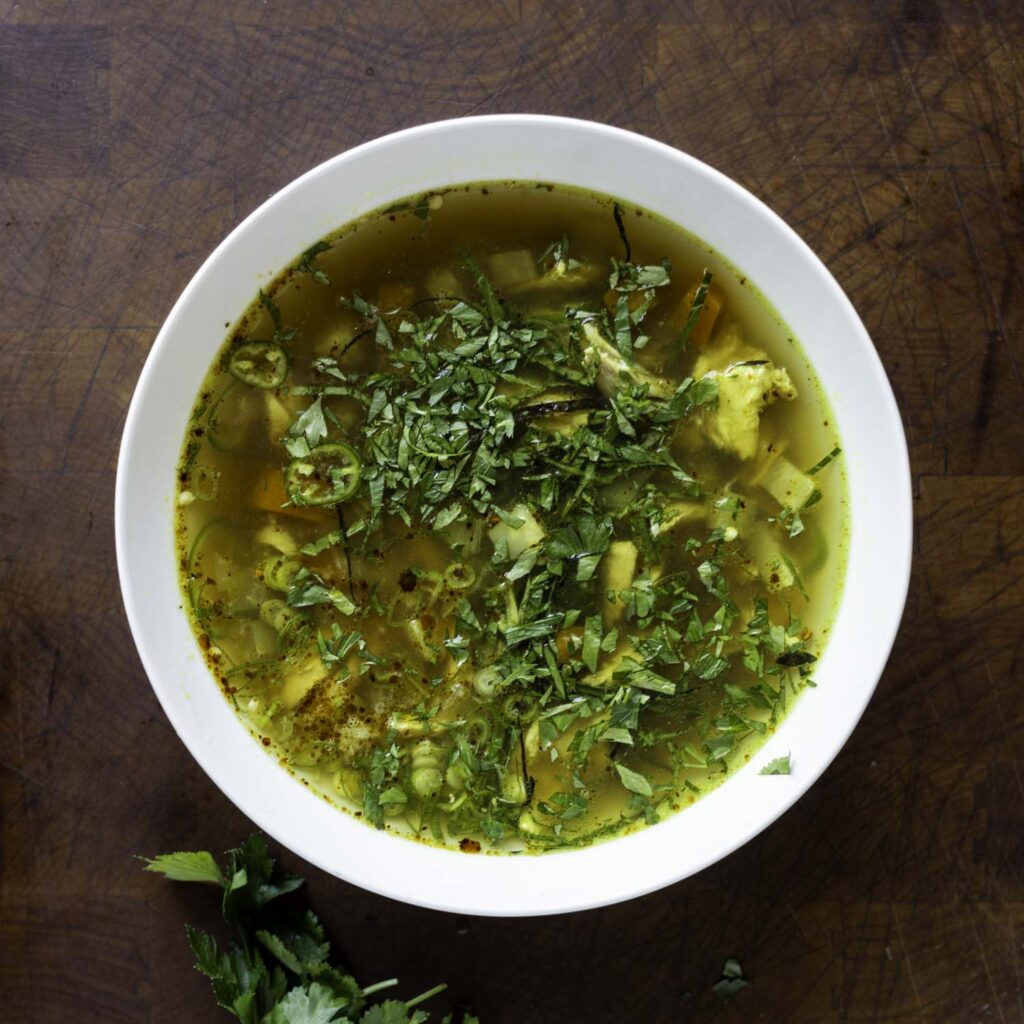
John also makes chicken cracklins for garnishing our bowls. Remove the skin from the whole chicken before you poach it and spread it out on a parchment-lined baking sheet. Then very lightly season it with salt and top it with another piece of parchment and a second baking sheet that nests inside the first one.
Bake the chicken skin at 350°F for about 40 minutes or until it’s golden and crispy. Crush the crispy chicken skins over your soup (just trust me).
If that seems like too much work, or if you run out of crispy chicken skin before you have made your way through the soup, store-bought fried shallots will do the trick. Adding cracklins and fried shallots is certainly an option too!
Megan Scott is a food editor, writer, and recipe developer with over 15 years of wide-ranging experience in the culinary industry. She has been a cheesemaker’s apprentice, a bakery owner, a pastry chef at a fine dining restaurant, and a culinary director at a creative agency where she developed thousands of recipes for food brands. In 2019 she co-authored the ninth edition of Joy of Cooking, and she is the cohost of the Joy of Cooking Podcast. She lives in Portland, Oregon, with her husband and collaborator, John Becker, and their two cats, Loki and Lola.





If you have an area around your home that gets ample sun, do future you a favor and plant some…