A Brief History of Joy
After nearly a century in print, nine editions, and over 20 million copies sold, Joy of Cooking has become the essential American cookbook. Thoughtfully updated and reimagined by four generations of the Rombauer-Becker family, Joy remains a relevant, approachable, and comprehensive kitchen resource for today’s home cook.
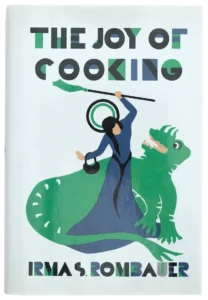
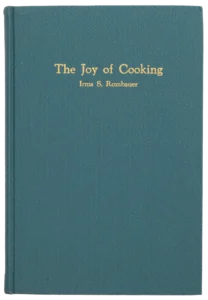




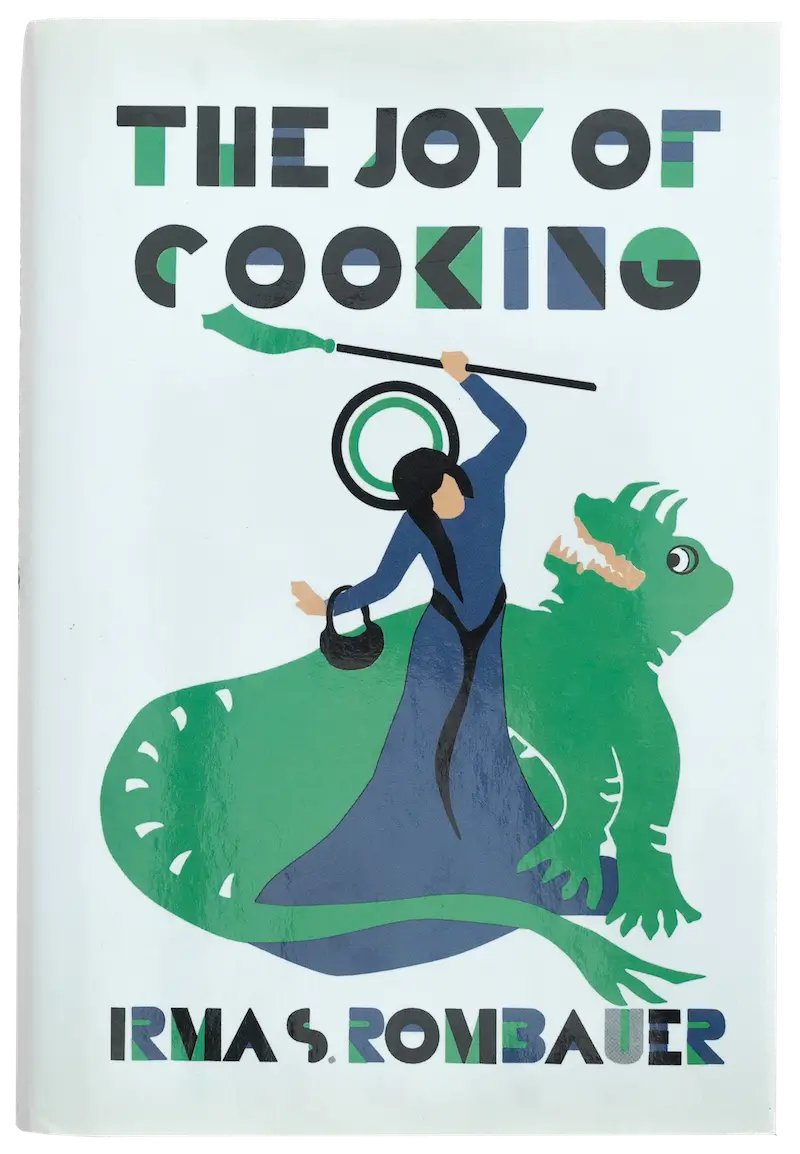
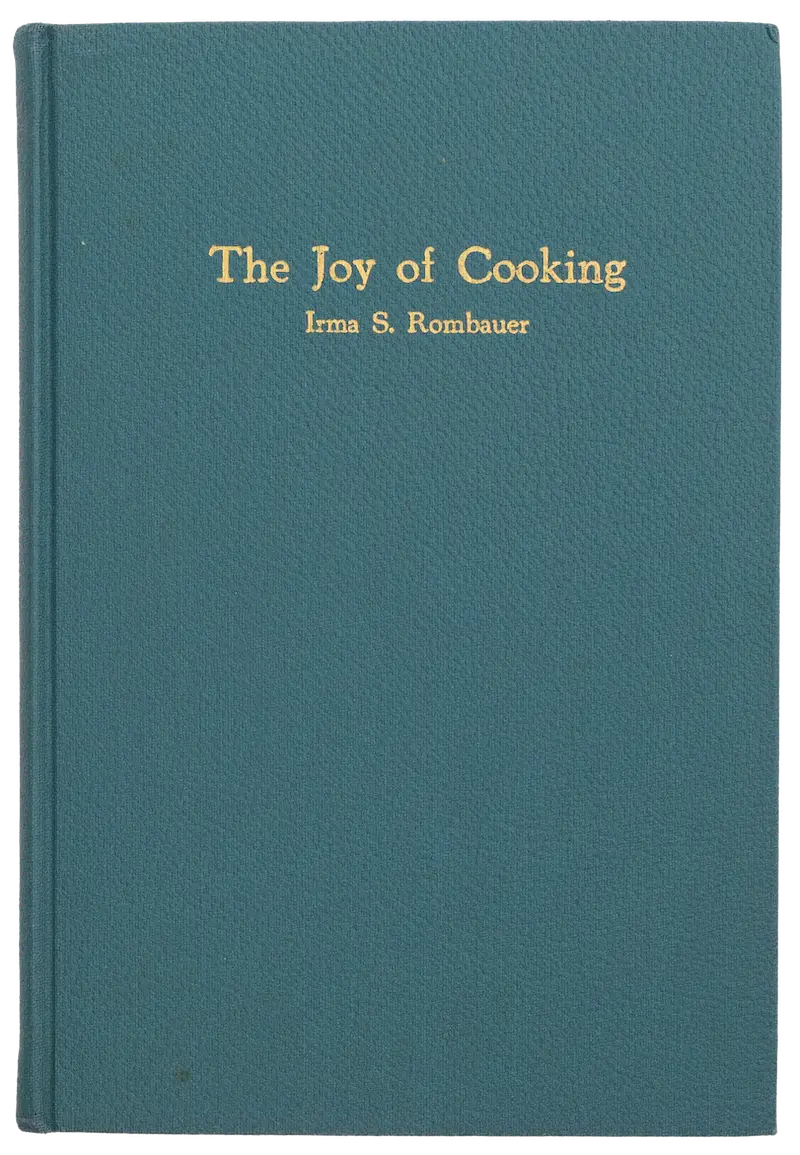
Irma Rombauer self-published The Joy of Cooking: A Compilation of Reliable Recipes With A Casual Culinary Chat during the twilight of Prohibition and in the depths of the Great Depression. A second-generation German homemaker from St. Louis, Missouri, she sold copies to friends (and their friends) and directly to bookstores, sometimes on consignment. This edition contained around 1,200 recipes in its svelte 395 pages and sported a vividly illustrated dust jacket and fanciful chapter headings.
Irma, then aged 54, hired the A.C. Clayton Printing Company to produce 3,000 copies of Joy. She had been recently widowed: Her husband Edgar died by suicide the year before and left her with the equivalent of two years’ wages, half of which went to printing costs.
Irma was an amateur cook and not well known for her prowess in the kitchen. However, she had an aptitude for cooking off the cuff, a knack for baking, and a passion for entertaining. In Joy, Irma turned inexperience into an asset: her spirited amateurism came through in her writing, endearing her to readers who were amateurs themselves.
Despite being published during Prohibition, the first recipe in the book is for a gin cocktail. This editorial choice, along with many playful headnotes, are early examples of the casual, irreverent tone Irma developed as an author. She related to readers as a peer rather than an authority in home economics or a model of domestic perfection. While modern readers have come to expect intimate, anecdote-laden food writing, Irma’s approach set Joy apart in an era when cookbooks read more like textbooks.
Marion Becker, Irma’s daughter, created fanciful papercuts that adorn the dust jacket and chapter headings. The dust jacket depicts St. Martha of Bethany, patron saint of cooks, taming a beast called the Tarasque. According to medieval legend, this dragon-like amphibian terrorized Provençal towns along the Rhône until Martha subdued the creature. On Joy’s cover, Marion arms Martha with a mop and a handbag, and the fearsome beast represents kitchen drudgery.
The distinctive font Marion used for the dust jacket was inspired by the Bifur typeface, created in 1929 by A.M. Cassandre, a French typographer and designer renowned for his innovative advertising posters.
Our first Joy to be produced with a publisher, the first to reach a nationwide audience, and the first to directly challenge the cooking bibles of the day as a wide-ranging, all-purpose cookbook. For this edition, Irma developed over 1,000 new recipes and devised an entirely new way to present them.
Following the modest commercial success of the first Joy, Irma quicky began work on a second. She approached several publishers with an ambitious proposal for a larger, expanded edition. After numerous rejections, Bobbs-Merrill, a large Indianapolis-based publishing house, accepted Irma’s nearly finished manuscript after bitter contract negotiations.
In the early 1930s, Irma perfected what would become our signature recipe-writing format. Later dubbed “the action method,” Joy’s recipes now presented readers with ingredient amounts in bold type at their point of use in the instructions. Recipes written in this format retain a narrative flow that makes them easier to follow. Instead of having to constantly refer to an ingredients list, readers can easily keep their place in the instructions as they stir pots, juggle ingredients, and adjust heat settings.
Editors at Bobbs-Merrill asked Irma to scale back her recipe headnotes to save space, but she wisely refused. Her charming witticisms and conversational tone made Joy stand out from other cooking bibles of the era, which tended to be blandly impersonal and written from a sober home economics perspective.
This edition included over 2,500 recipes. Irma supplemented her eclectic selection of recipes from the 1931 Joy with hundreds of the classic, everyday dishes readers would expect to find in an all-purpose cookbook, as well as regional American specialties like New England boiled dinner, brown bread, gumbo, jambalaya, beaten biscuits, and chess tarts. Her selection of German family recipes was joined by other European specialties like crêpes Suzette, polenta, soufflé potatoes, borscht, minestrone, and goulash. She also included several Americanized recipes for Asian dishes, including sukiyaki, chop suey, and rijsttafel.
Other innovations included directions for using electric mixers, advice on how to cook in a small kitchen or kitchenette, and strategies for how to use leftovers, drippings, scraps, and excess ingredients. With the repeal of Prohibition, Irma expanded Joy’s repertoire of cocktails and included advice on how to pair and serve wines.
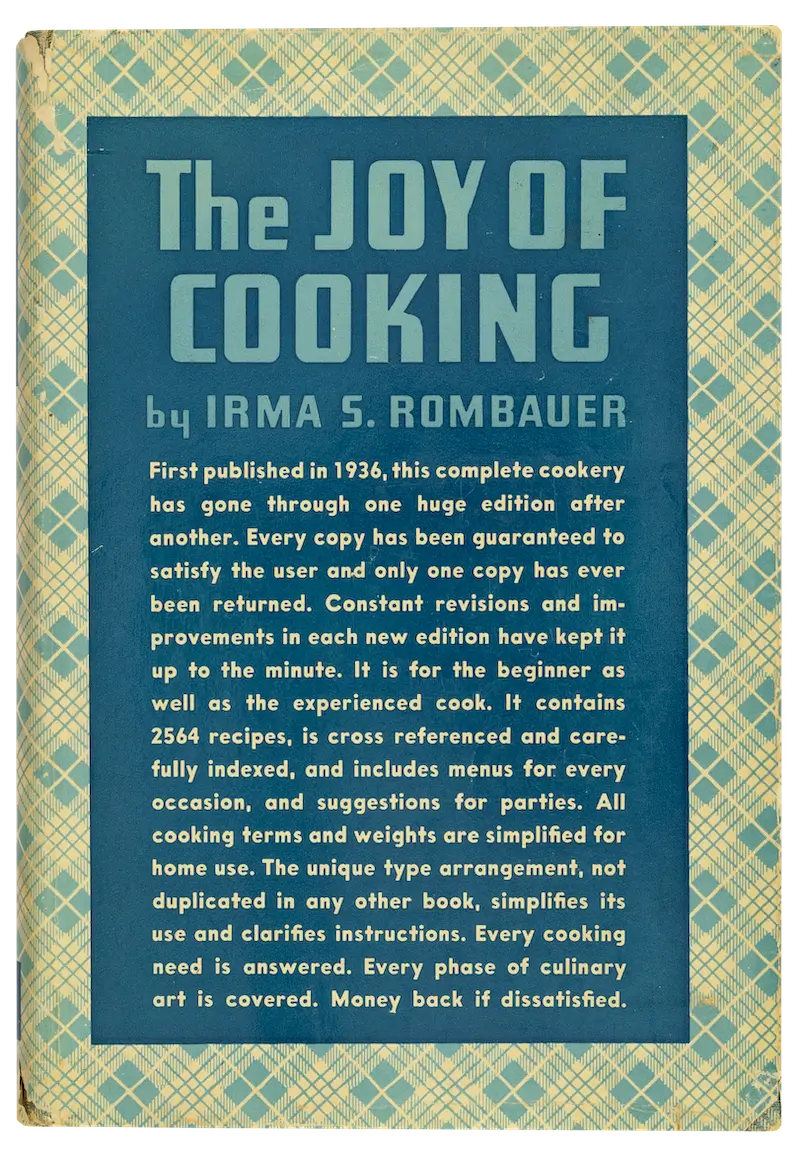
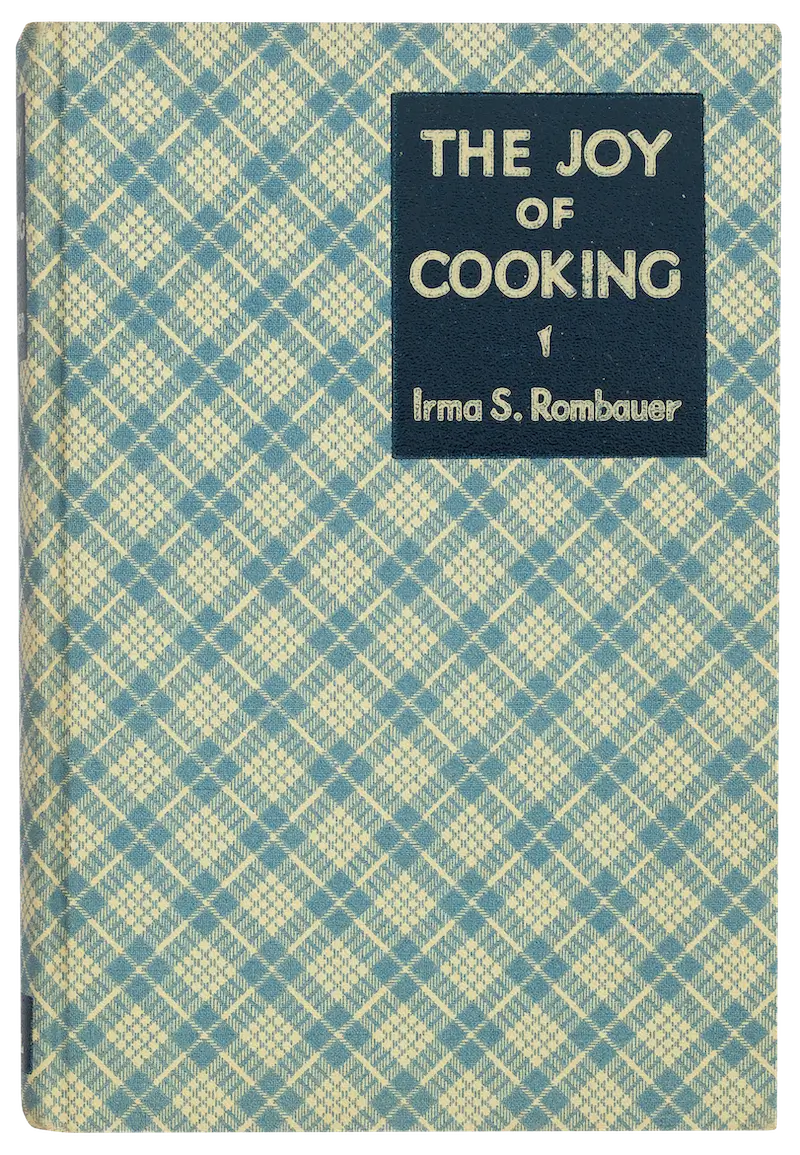
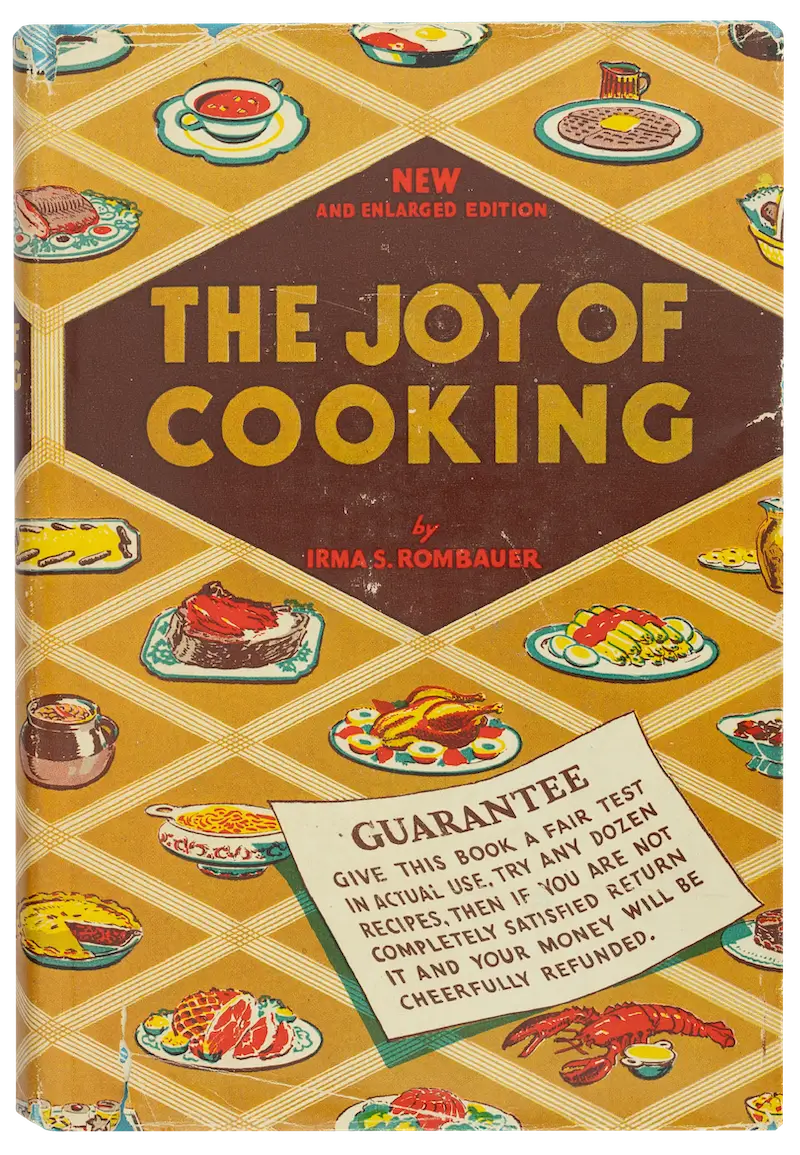
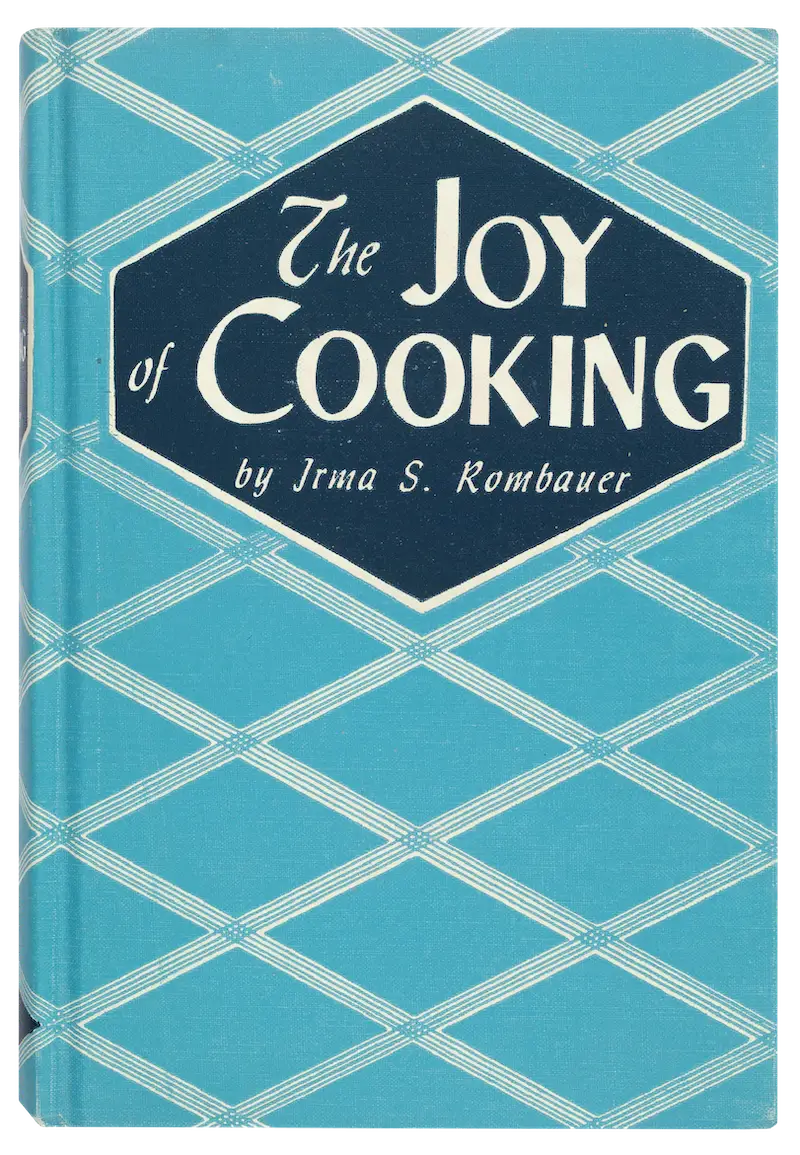
For Joy’s third edition, published during the Second World War, Irma continued to expand its coverage with more essential culinary wisdom and a wider selection of recipes, now 3,400 strong. Notable additions to the first bestselling Joy include new timesaving recipes from her 1939 book, Streamlined Cooking, advice on how to cope with wartime rationing, and culinary reference material.
Irma supplemented material from the 1936 edition with new dishes, including hundreds of easy, 30-minutes-or-less recipes. Most came from Irma’s 1939 cookbook Streamlined Cooking: a slender volume that catered to the needs of hurried professionals who lacked the time and means to prepare from-scratch meals. Many of these recipes used convenience products like canned soups and frozen foods.
Joy’s selection of regional fare grew with the addition of Maryland fried chicken, Brunswick stew, red velvet cake, oysters Rockefeller, and corn pudding. All-American classics new to the 1943 include chocolate chip cookies, blondies, banana bread, bread-and-butter pickles, and tuna casserole.
International dishes that graced Joy’s pages for the first time: ravioli, gnocchi, guacamole (as “avocado pear salad”), beef Stroganoff, steak and kidney pie, Swedish meatballs, pots de crème, bouillabaisse, and egg foo young.
Irma added several chapters of reference information to the 1943 Joy, including charts dealing with the vitamin content and caloric value of common foods, a section on the use of herbs, an expanded glossary of cooking terms, and tables for ingredient equivalents and volume-to-weight conversion.
This edition includes timely sections on how to cope with the rationing of sugar and meat. For the former, Irma included a dozen recipes for sugarless or “sugar-saving” baked goods, and a list of recipes in the book that use little to no sugar; For the latter, she provided several recipes for protein-rich soybeans, as well as a large list of recipes that either “stretch” meat or are high in protein from other sources.
To answer the needs of readers cultivating wartime “victory gardens,” a handy timetable was added for pressure-canning vegetables.
After the war ended, Bobbs-Merrill produced another edition in 1946 to remove the rationing information (Irma added a smattering of new quick recipes to avoid changing the page count).
Julia Child learned to cook with the help of a 1943 edition of Joy.
The 1951 edition marked several significant firsts for Joy. It was the first edition to have a co-author: Irma’s daughter, Marion Rombauer Becker; the first edition to include instructional illustrations; and the first edition to break 1,000 pages and 4,000 recipes. Marion’s influence can be seen everywhere, from an overhauled nutrition chapter to the most forward-thinking bread chapter of its day.
Marion was involved in all aspects of the revision, including art direction. Her hand is most evident in the thoroughly revised chapter on bread baking, which includes scientifically informed discussions on leavening, sugar substitutes, testing the temperature of your oven, and the composition of wheat. She also championed whole-grain baking in an era where the enriched white flour loaf was considered a modern technological marvel.
Marion’s husband John, a Modernist architect, designed the 1951 edition’s iconic dust jacket. The dust jacket designs for all subsequent editions were based on this one, with its prominent lower case j.
Our fourth edition was the first to include instructional art, with over 150 illustrations of kitchen prep techniques, cooking processes, and how to serve foods. Drafted by Ginnie Hoffman, these elegant, simple line drawings have a charming, mid-century quality that reminds us of The Jetsons. Joy’s most infamous artwork—the squirrel-skinning illustration—was first created by Hoffman for this edition.
New subjects covered in this edition: how to freeze foods and cook with frozen foods; how to adjust recipes for high-altitude cooking; how to use two specialized kitchen tools: the pressure cooker and the electric blender. New recipes include Joy’s first foray into pizza-making, directions for making soy and almond milk, and information on culturing your own yogurt.
There are over 50 recipes in the 1951 edition for hollowing out and stuffing vegetables with fillings. High score!
To make room for all of these exciting ways to stuff vegetables, Irma and Marion had to cull Joy’s selection of recipes for the first time.
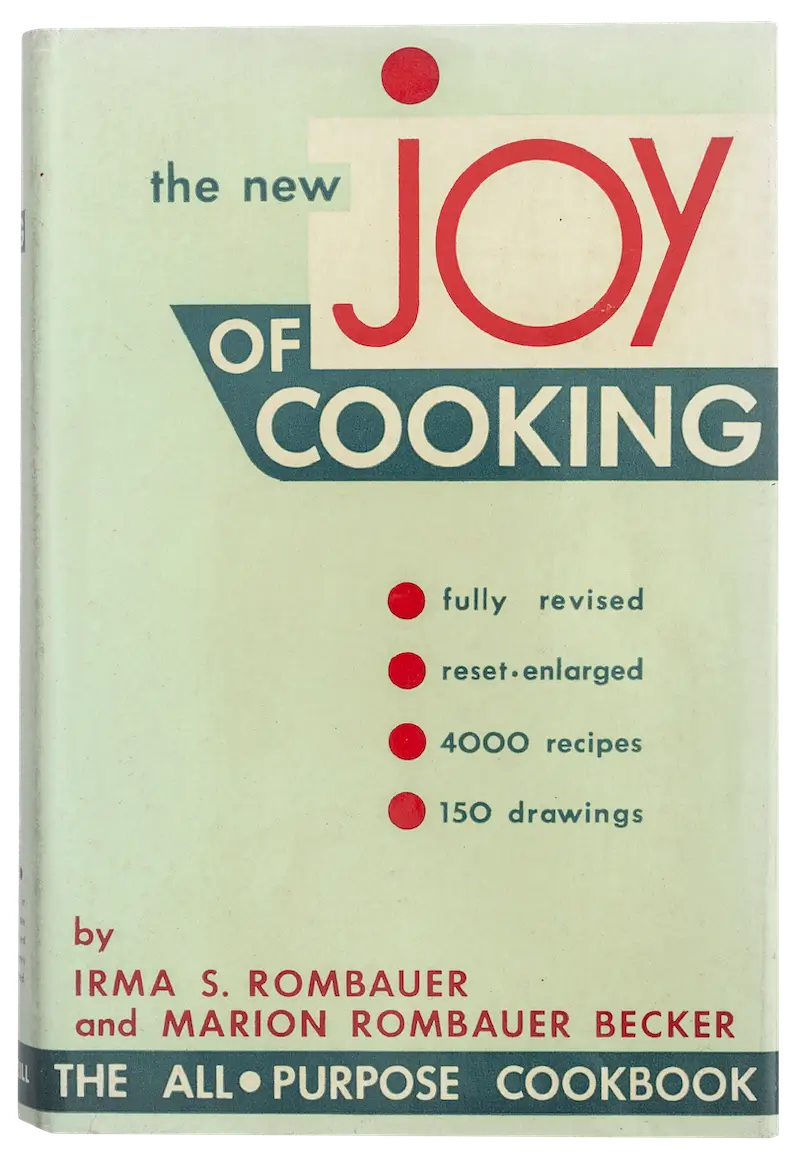
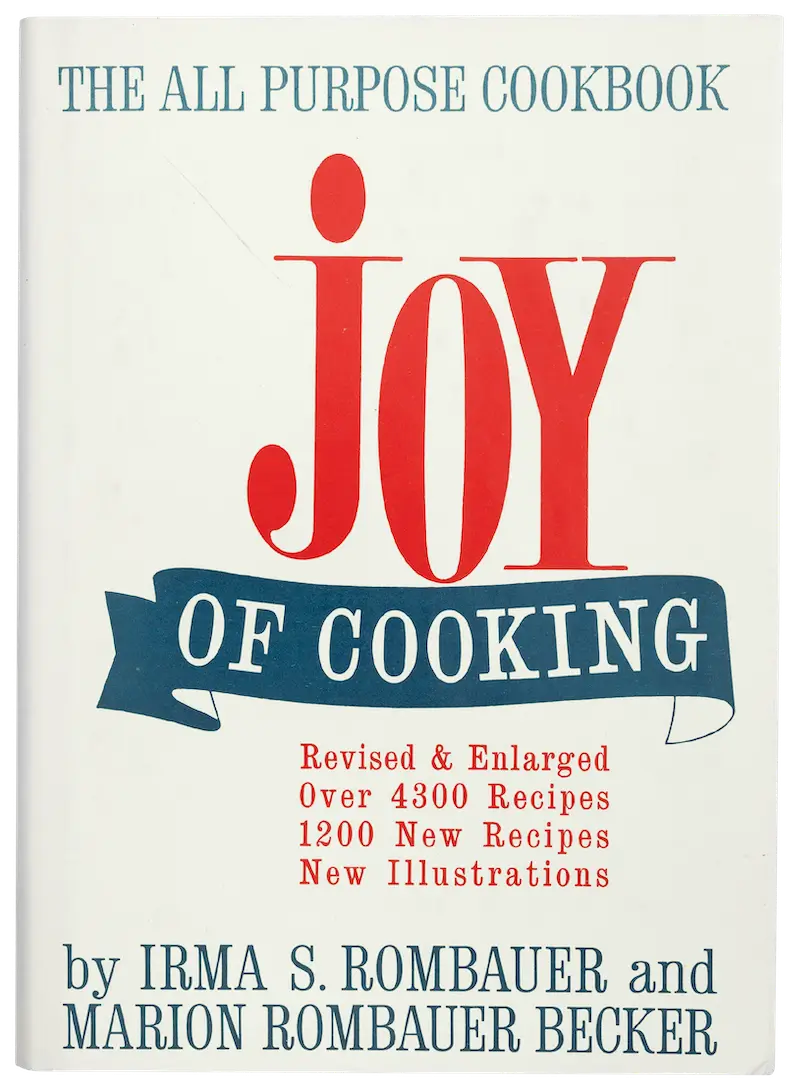
Marion’s first solo revision transformed Joy with a new organizational structure, hundreds of new recipes, detailed explanations of cooking methods, and countless sections on specific ingredients. In many ways, the 1963 edition is the first “modern” Joy, marking its evolution from a large cookbook to a comprehensive kitchen reference.
Irma suffered a series of strokes from 1955 onward, leaving Marion as sole author and reviser of this edition. Though uncredited, Marion’s husband John made countless contributions as an editor and writer.
“Revision” does not quite capture the quality and scope of Marion’s reworking of Joy. She was not content to shuffle in trendy recipes and attempt to mimic Irma’s congeniality. In the words of food historian and Joy biographer, Anne Mendelson, Marion included “knowledge that made the difference between walking through a formulaic script and applying real judgment.”
Marion devoted two new chapters to empowering readers with the knowledge to chart their own course in the kitchen. “The Foods We Heat” gave detailed explanations of cooking methods and equipment. “Know Your Ingredients” gave overviews of a wide range of basic foods and seasonings, ranging from a detailed account of flour types to a treatise on herbs and advice on how to season dishes with MSG. In addition to these chapters, countless informative “About” sections peppered the entire book.
Marion added hundreds of new recipes, many of them from global food cultures: French cassoulet and salade Niçoise, Italian osso bucco and frittata, as well as Mediterranean specialties like couscous, dolmas, and hummus. Several Mexican dishes—such as mole, huevos rancheros, and enchiladas—were added. Chinese additions included fried rice, egg rolls, and wontons.
Marion made a concerted effort to include from-scratch, DIY recipes and procedures. Readers could now find instructions for churning butter, pasteurizing milk, blending curry powder, and cultivating herbs.
The game chapter took on a life of its own under Marion’s authorship. Joy now covered the preparation of opossum, bear, racoon, muskrat, woodchuck, beaver, and peccary.
The 1963 edition was the first and only Joy to be published in paperback (in addition to the classic hardcover format).
Our bestselling edition of all time, the 1975 Joy expanded on Marion’s forward-thinking vision for the book, remaining an essential kitchen companion to countless readers and home cooks for decades. In her final edition, Marion touched on conservation issues like soil health and pollution, the ills of factory farming, and how to eat more sustainably while continuing to offer up non-judgmental guidance for home cooks of all stripes.
Marion broadened Joy’s culinary horizons further, bringing the total recipe count to 4,500. Notable additions include Chinese firepot, Ghanian peanut soup, taramasalata, muesli, challah, baklava, and tortilla Española.
Joy’s reference chapters grew. Know Your Ingredients now provided instructions for how to make tofu, tahini, and hard cheeses from scratch.
This edition swapped Ginnie Hoffman’s illustrations for over 1,000 new drawings, including decorative chapter headings, by artist Ikki Matsumoto.
Marion’s son Ethan, a recent graduate of Le Cordon Bleu in Paris, helped test recipes for the new edition. His expertise as an outdoorsman enriched the game chapter, Joy’s coverage of campfire cooking, and backpacking menu suggestions.
This was Marion’s last edition. She died on December 28th, 1976. She composed a message to friends and family that was sent out after her death. In true form, Marion’s message ended with the call to arms “May greater insights linked with bolder actions be our common future.”
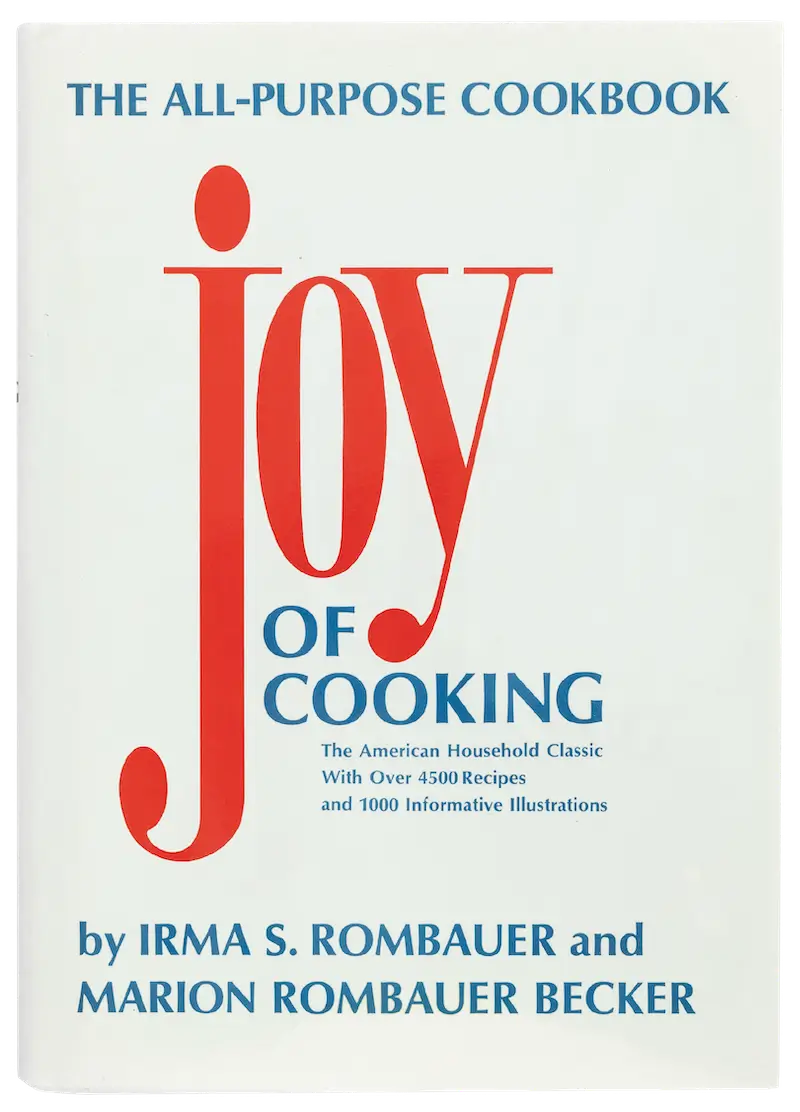
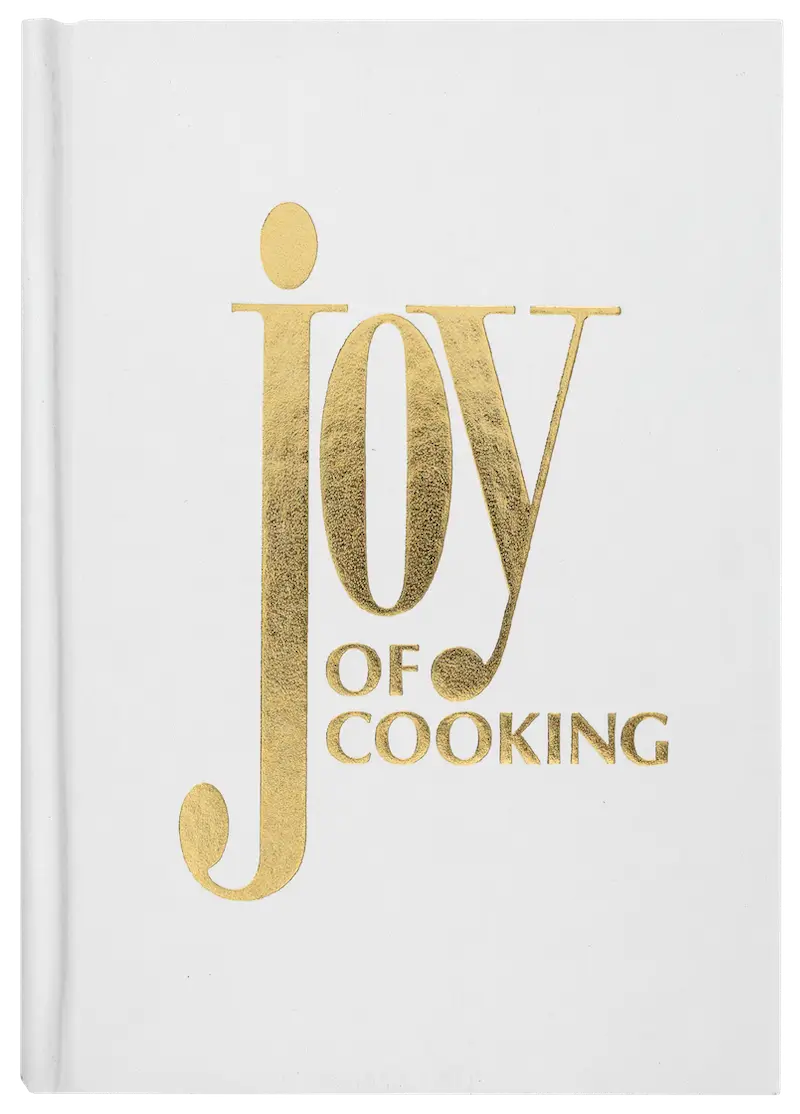
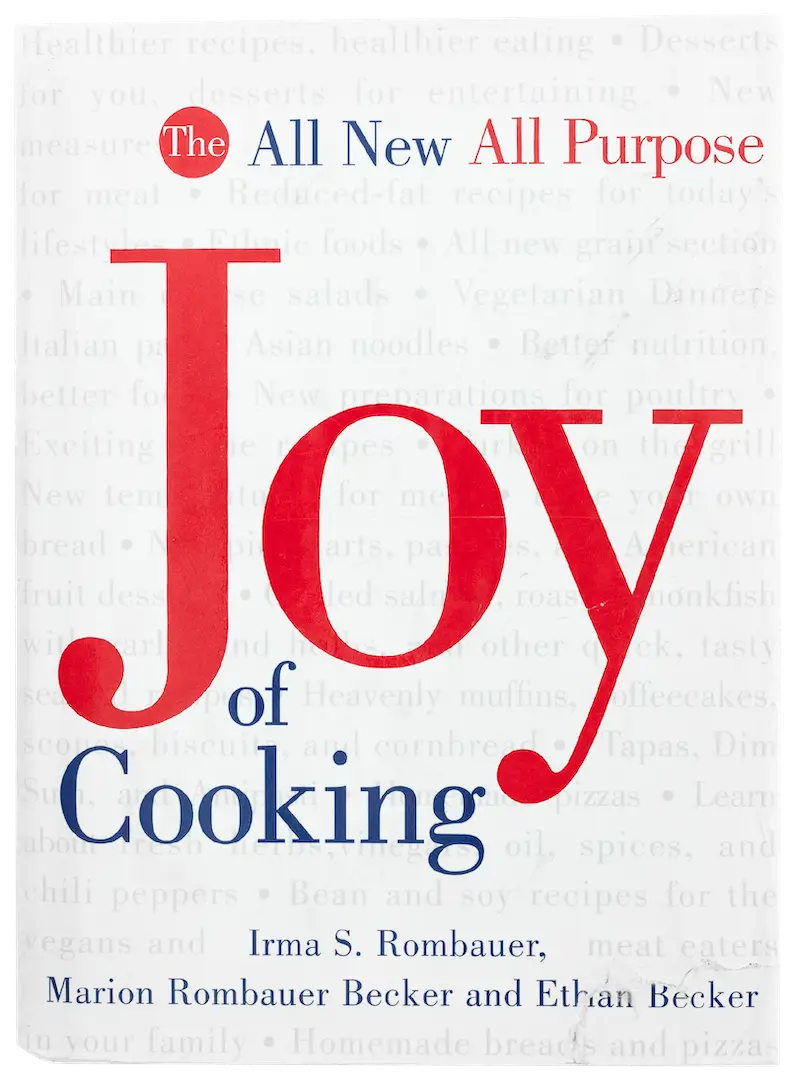
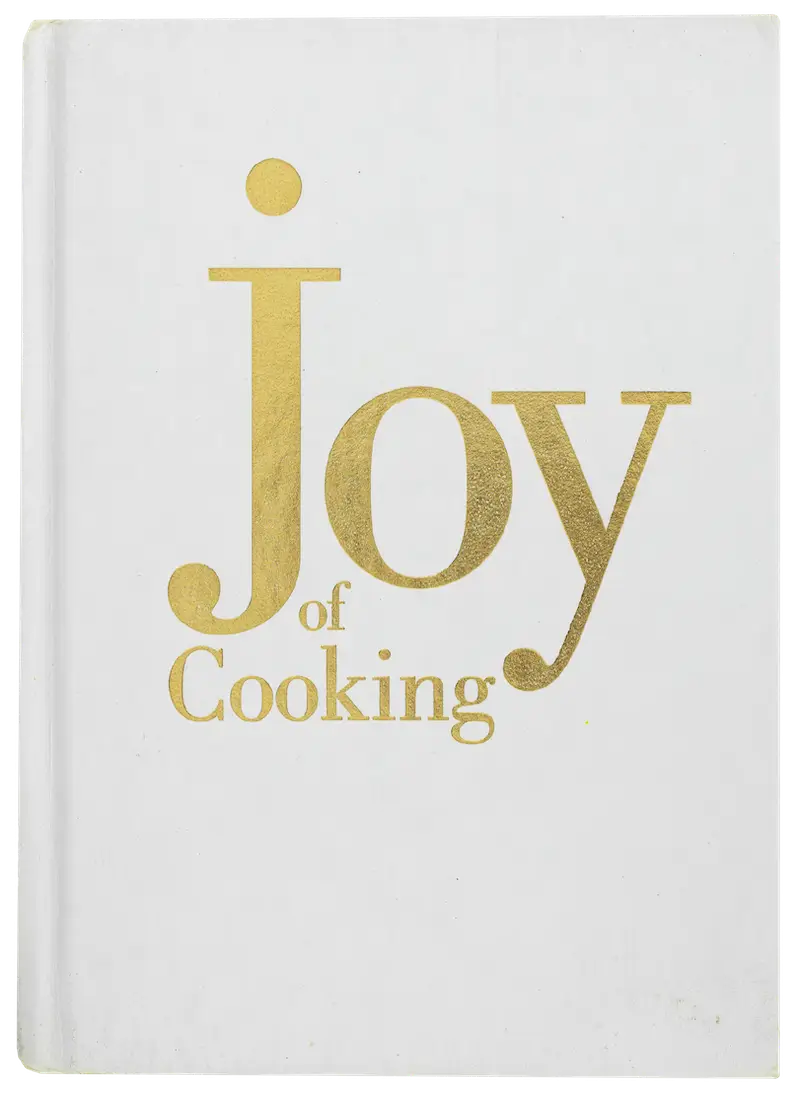
A long 22 years after Marion’s last edition was published, her son Ethan Becker authored a thoroughly updated edition of Joy with the help of influential cookbook editor Maria Guarnaschelli. Thousands of new recipes displaced most of Irma’s and Marion’s work, and introduced Joy to a new generation of readers.
Guarnaschelli prevailed in plotting the course of the revision, which scrapped the organization of the 1975 edition and radically altered Joy’s contents to meet the perceived needs and tastes of 1990s home cooks. Over the course of the revision, she employed nearly 100 professional food writers and the services of a professional test kitchen. Experts she consulted include celebrated cookbook authors Maricel Presilla, Rick Bayless, Rose Levy Beranbaum, Julie Sahni, Virginia Willis, Molly Stevens, Bruce Aidells, and Alice Medrich.
Thousands of new recipes replaced those written by Marion and Irma. Though many readers lamented the loss of these dishes—one reviewer likened the 1997 edition to the disastrous reformulation of “New Coke” in the mid 1980s—many essential, timely, and worthwhile recipes made their way into Joy for the first time, including phó, gravlax, caldo verde, pork vindaloo, New York-style cheesecake, and blackberry-raspberry grunt. Other additions, such as a new selection of reduced-fat and low-fat recipes, have not aged as gracefully.
Guarnaschelli’s ambitious rewriting of Joy resulted (perhaps not surprisingly) in a soaring word count: the galleys, bound in 2 volumes, topped out at nearly 1,500 pages. Entire chapters were sacrificed in the ensuing rush to trim the manuscript in time for publication, including chapters on cocktails, jam-making, pickling, candy-making, and frozen desserts. The Know Your Ingredients chapter was added at the last minute at Ethan’s insistence. Essential new ingredients like fish sauce, seaweeds, wasabi, garam masala, and lemongrass were added.
All-new illustrations—drawn by Laura Hartman Maestro—were done in a stippled, photo-realistic style.
Between 2000 and 2002, Ethan oversaw the publication of the All About series of books, produced by Weldon Owen. These eleven single-subject titles included step-by-step photography as well as photos of finished dishes. Almost of these volumes reprinted material originally published in the 1997 edition. All About Canning and Preserving, on the other hand, drew from the preservation chapters that were cut from the manuscript.
With the benefit of more than two decades of hindsight, we now see the 1997 edition and the All About series it spawned as an aberration in our publishing history. It would take 25 years and two editions to reconcile all of the essential updates added during this revision with legacy material from previous editions of Joy in a way that remained true to the spirit of the book.
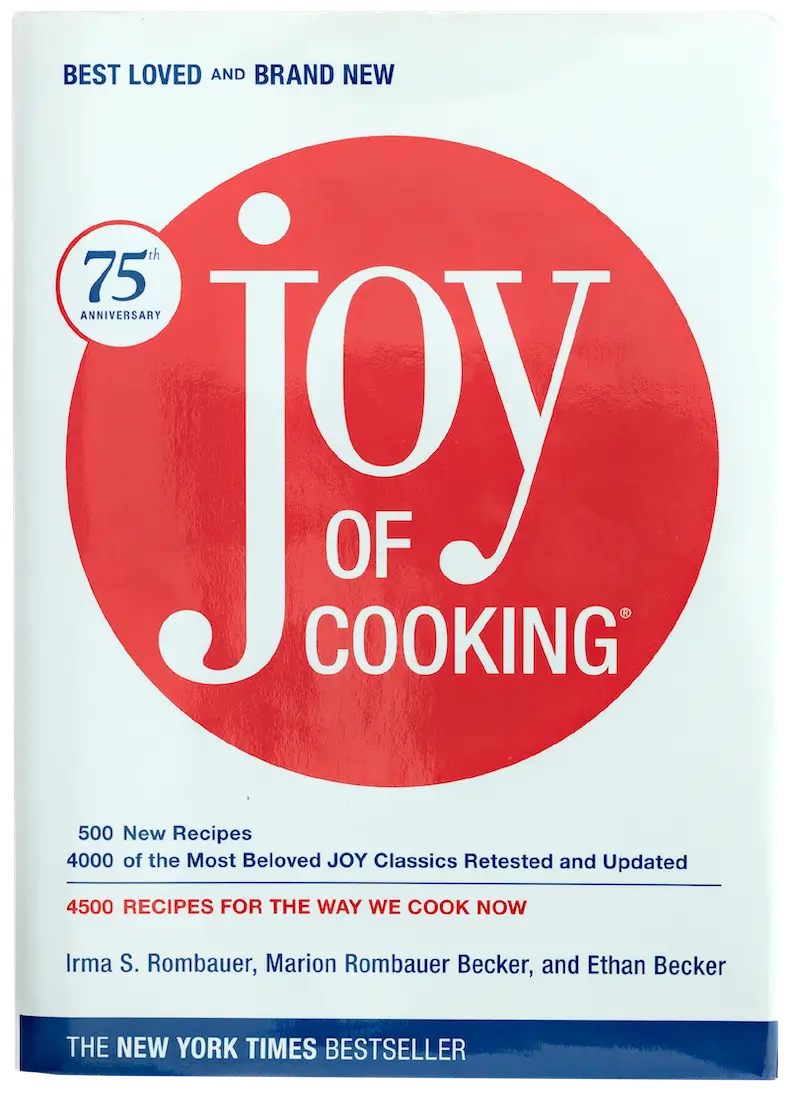
To mark our 75th anniversary, the eighth edition restored chapters that were cut in the 1990s and reestablished Joy’s encyclopedic breadth. Recipes and reference material from the best-selling 1975 edition were brought back and thoroughly updated, along with other “retro” flourishes to highlight our long and varied publication history.
In the early 2000s, Ethan and his former wife Susan set out to restore Joy to the familiar, well-loved format and comprehensive scope of the 1975 edition while retaining much of the material added in 1997. This edition marked the 75th anniversary of Irma publishing the first Joy.
All the chapters that were removed in the 1990s were restored and updated. All recipes duplicated in the 1997 and 1975 editions were tested against one another to ensure the best version was included.
Over 500 recipes were added, including classic American regional dishes like smoked brisket, King Ranch casserole, egg creams, and Johnny Marzetti pie. Joy’s ever-expanding international repertoire now featured Italian classics like Amatriciana sauce and granita, Southern and Eastern European recipes for pierogi and pastitsio, and dishes from Asian food cultures such as keema alu, shumai, Thai curry pastes, mango lassi, and green papaya salad.
To mark our anniversary, dozens of judiciously chosen “retro” dishes from previous editions were retested and brought back to gesture at the (often amusing) evolution of American tastes Joy had recorded over the course of the 20th century.
For the first and only time, Joy included recipes specifically written for slow cookers. Recipes that utilize canned soups—a staple in every Joy edition from 1943 to 1975—were reintroduced. On the other end of the convenience spectrum, the 2006 restored instructions for making your own tofu, yogurt, and sauerkraut, and included new material on sprouting grains and beans at home.
The expanded chapters on ingredients and cooking techniques were updated with the help of celebrated food science writers Harold McGee and Shirley Corriher. Updates to the Know Your Ingredients chapter are notable, especially the enhanced usability of its alphabetic organization.
Illustrations were again reimagined, this time by artist John Norton, whose previous work included illustrating science textbooks.
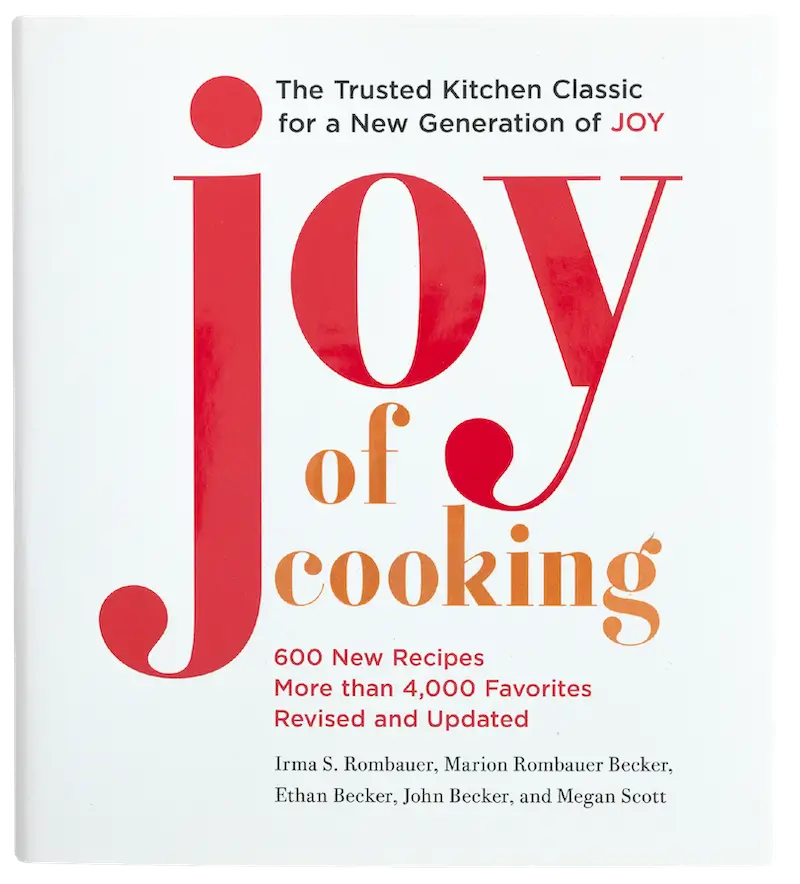
The newest Joy, thoroughly updated by Irma’s great-grandson John Becker and his wife Megan Scott, offers a timely combination of classic recipes, essential new dishes, and dependable reference information. Written with the needs of home cooks foremost in mind, the result is both a solid collection of delicious, thoroughly tested recipes and an indispensable kitchen reference that will give curious novices the answers they need and provide a useful refresher for seasoned cooks.
Following Irma and Marion’s revision strategy, every chapter of the 2019 was thoughtfully reconsidered. Legacy material has been faithfully improved and supplemented with new recipes and up-to-date information to meet the needs of today’s home cooks.
Over 600 new dishes were developed for the 2019 Joy, and thousands of classics were tested and tweaked. All recipe testing was accomplished in modest home kitchens by John, Megan, and several trusted home cooks.
A new “Streamlined Cooking” chapter offers strategies for cooking as daily practice, focusing on economizing on time, money, and ingredients, with suggestions for how to cook ahead and repurpose leftovers as well as tips for streamlining meal prep and avoiding waste.
Several regional American classics grace Joy’s pages for the first time, including buckeyes, boiled peanuts, gooey butter cake, Louisiana-style fermented hot sauce, Cajun dirty rice, hot-smoked salmon, crawfish pie, Chicago-style deep-dish pizza, New Mexico-style enchilada stacks, and Utica greens.
Recipes for contemporary dishes include brown butter-hazelnut crackers, kimchi mac and cheese, olive oil cake, freekeh with greens, chickpeas, and halloumi, and roasted cauliflower with green olives and lemon. The 2019 Joy also contains instructions for making newly popular condiments like chili crisp, sriracha, zhug, and Calabrian-style chiles at home.
Readers will find an expanded selection of international fare, ranging from appetizers like Thai-style wings, fromage fort, and muhammara to mains like gobi Manchurian, chana masala, mapo dofu, mujadara, khao soi gai, miso ramen, and lamb shawarma.
In addition to a thoroughly modernized vegetable chapter, there are many new vegan and vegetarian recipes throughout the book, including vegan chocolate cake, caramelized tamarind tempeh, crispy pan-fried tofu, spicy chickpea soup, coconut sticky rice with mango, and roasted mushroom burgers.
Joy’s baking chapters now include gram weights for accuracy and ease of clean-up, along with a refreshed line-up of baked goods like cannelés de Bordeaux, bialys, kouign amann, rustic no-knead sourdough, khachapuri, ciabatta, and chocolate-walnut babka.
This edition features an entire section devoted to fermentation, with an overview of the science involved and recipes for making kimchi, half-sour pickles, kombucha, and fermented hot sauce. Other DIY recipes new to Joy include curing bacon, egg yolks, and fish roe.
Chapters on cooking methods and ingredients have been thoroughly revised and expanded. Readers will learn all they need to know to use a wide range of ingredients, from amchur to za’atar. New techniques include low-temperature and sous vide cooking, fermentation, dry-frying, and cooking with both stove-top and electric pressure cookers. Barbecuing, smoking, and other outdoor cooking methods are covered in even greater detail.
Towards a century of Joy
As a living, evolving text, the work of nurturing Joy never ceases. With our centennial approaching, we continue to devour new recipes, explore cooking techniques, and study culinary trends—all with an eye toward Joy’s 100th anniversary edition.
We’ll keep you up to date on our progress, posting news, details for future events, meditations, and the occasional annoying opinion on our blog.
Through our online recipe collection, we’ll share what we’re cooking in our kitchen, recipes we’re developing for the 2031 edition, and (of course) a selection of classics from our vast archive.
Our resources page will host explainers on new ingredients and cooking methods, as well as curated excerpts from the reference pages of our 2019 edition.